
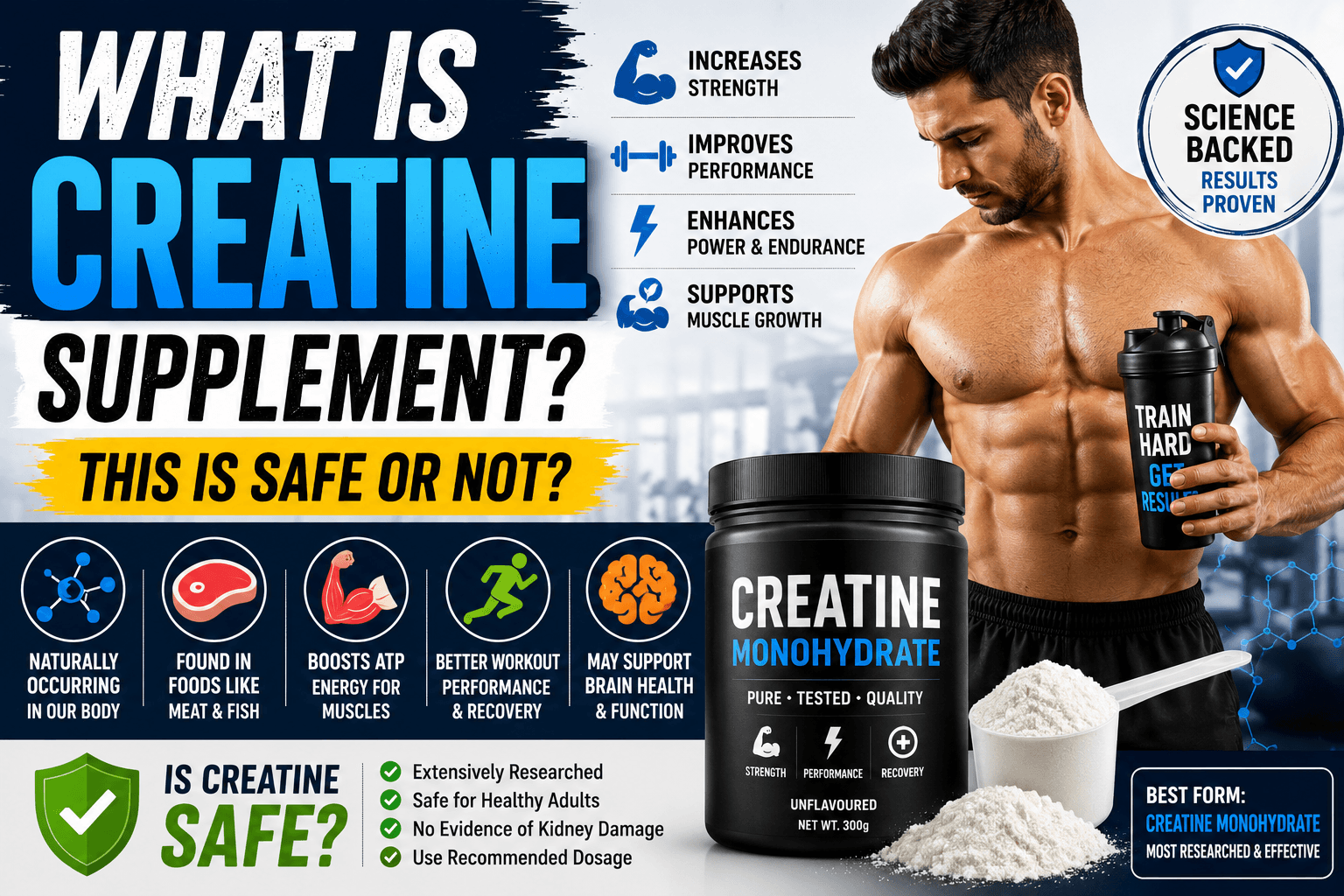
What Is Creatine?
Creatine is one of the most researched and widely used sports supplements in the world. It is popular among athletes, bodybuilders, and fitness enthusiasts because it helps improve strength, power, and exercise performance.
Despite its popularity, many people still ask questions like:
- Is creatine a steroid?
- Is creatine safe?
- Does creatine damage the kidneys?
- Can beginners take creatine?
- Should women use creatine?
The good news is that decades of scientific research have helped answer many of these questions.
In this complete beginner’s guide, you’ll learn what creatine is, how it works, its benefits, possible side effects, and whether it’s safe for everyday use.
Table of Contents
What Is Creatine?
Creatine is a naturally occurring compound found in your muscles and brain. It is made from three amino acids:
- Arginine
- Glycine
- Methionine
Your body produces about 1–2 grams of creatine each day, mainly in the liver, kidneys, and pancreas.
You also get creatine naturally from foods such as:
- Red meat
- Fish
- Seafood
However, the amount of creatine in food is relatively small compared to what many people consume through supplements.
What Does Creatine Do?
Your muscles store creatine in the form of phosphocreatine.
During short bursts of high-intensity exercise—such as lifting weights, sprinting, or jumping—your muscles need energy very quickly.
The body’s primary energy source for these activities is ATP (Adenosine Triphosphate).
Creatine helps your muscles regenerate ATP faster, allowing you to:
- Lift heavier weights
- Perform more repetitions
- Sprint harder
- Recover faster between sets
This improved training performance may lead to greater strength and muscle gains over time when combined with proper exercise and nutrition.
Is Creatine a Steroid?
No.
This is one of the biggest myths about creatine.
Creatine is not:
- An anabolic steroid
- A hormone
- A performance-enhancing drug in the steroid category
Instead, it is a naturally occurring substance that your body already produces and that is also found in everyday foods.
What Are the Benefits of Creatine?
Research has shown several potential benefits of creatine supplementation.
1. Increases Strength
Creatine can improve your ability to perform high-intensity exercises, allowing you to train harder over time.
2. Supports Muscle Growth
Creatine doesn’t directly build muscle, but by helping you train with greater intensity and volume, it may contribute to increased muscle growth over time.
3. Improves Exercise Performance
Athletes involved in activities requiring short bursts of power may experience improved performance.
Examples include:
- Weightlifting
- Sprinting
- Football
- Basketball
- CrossFit
4. Enhances Recovery Between Sets
Creatine helps replenish energy stores more quickly, allowing you to maintain better performance during repeated efforts.
5. May Improve Brain Function
Some studies suggest creatine may support certain aspects of brain function, particularly during sleep deprivation or mentally demanding tasks. Research in this area is ongoing.
Is Creatine Safe?
For healthy adults, creatine monohydrate is generally considered safe when taken as directed. It is one of the most extensively studied dietary supplements available.
Long-term research has not shown harmful effects in healthy individuals using recommended doses.
However, supplements are not appropriate for everyone. People with kidney disease or other significant medical conditions should consult a qualified healthcare professional before using creatine or any dietary supplement.
Does Creatine Damage the Kidneys?
This is one of the most common concerns.
Current research indicates that recommended doses of creatine have not been shown to damage healthy kidneys.
However:
- People with existing kidney disease should seek medical advice before using creatine.
- Taking more than the recommended amount is unlikely to provide additional benefits and is not advisable.
Does Creatine Cause Hair Loss?
Some people believe creatine causes hair loss.
At present, there is no strong scientific evidence proving that creatine directly causes hair loss.
The concern originated from limited research that suggested changes in one hormone marker, but later studies have not consistently confirmed a direct link.
More research is needed in this area.
Does Creatine Cause Water Retention?
Creatine may increase water content inside muscle cells.
This is considered a normal effect and may contribute to fuller-looking muscles.
It is different from unhealthy fluid retention under the skin.
Maintaining good hydration while taking creatine is recommended.
Which Type of Creatine Is Best?
There are many forms available, including:
- Creatine Monohydrate
- Creatine HCL
- Buffered Creatine
- Creatine Ethyl Ester
- Creatine Nitrate
Among these, Creatine Monohydrate has the strongest scientific evidence supporting its effectiveness and safety.
It is also generally the most affordable option.
How Much Creatine Should You Take?
Many people choose one of these common approaches:
Option 1: Daily Intake
Take 3–5 grams per day consistently.
Option 2: Loading Phase
Some people use a loading phase for several days followed by a maintenance dose.
Both methods can increase muscle creatine stores over time. A loading phase is optional, not mandatory.
If you have questions about what’s appropriate for you, consult a qualified healthcare professional.
When Should You Take Creatine?
Research suggests that consistency is more important than timing.
You can take creatine:
- Before a workout
- After a workout
- With a meal
- At any convenient time of the day
The key is taking it regularly.
Can Beginners Take Creatine?
Yes.
Beginners who already have a consistent training routine and balanced diet may choose to use creatine if it aligns with their goals.
However, supplements should never replace:
- Proper nutrition
- Progressive strength training
- Adequate sleep
- Recovery
These habits have a much greater impact on long-term results.
Can Women Take Creatine?
Yes.
Creatine works through the same biological mechanisms in women as it does in men.
Women who engage in resistance training or certain sports may also benefit from creatine supplementation.
Natural Food Sources of Creatine
Although supplementation provides larger amounts, creatine naturally occurs in foods such as:
- Beef
- Pork
- Salmon
- Tuna
- Herring
Vegetarians and vegans generally consume less dietary creatine because plant foods contain very little naturally occurring creatine.
Who Should Avoid Creatine?
Creatine may not be appropriate for everyone.
Consult a healthcare professional before using creatine if you:
- Have kidney disease
- Have serious liver disease
- Are pregnant or breastfeeding
- Are under medical treatment for chronic illnesses
- Are taking medications that may affect kidney function
Common Myths About Creatine
Myth 1: Creatine Is a Steroid
Fact: Creatine is not a steroid and does not work like anabolic steroids.
Myth 2: Creatine Damages Healthy Kidneys
Fact: Research has not shown kidney damage in healthy adults using recommended doses.
Myth 3: Creatine Is Only for Bodybuilders
Fact: Athletes from many sports—and even recreational gym-goers—may choose to use creatine.
Myth 4: You Must Cycle Creatine
Fact: Current evidence does not indicate that healthy individuals need to cycle creatine on and off.
Frequently Asked Questions
Can I take creatine every day?
Many healthy adults choose to take creatine daily as part of their supplement routine. If you have any medical condition, consult your healthcare provider first.
Can I mix creatine with protein powder?
Yes. Many people consume creatine and protein together.
Do I need to drink more water?
Staying well hydrated is a good practice while taking creatine, especially if you exercise regularly.
Will creatine help me lose fat?
Creatine is not a fat-burning supplement. Its primary role is to support strength and high-intensity exercise performance.
How long does creatine take to work?
Results vary. Some people notice improvements in training performance within a few weeks of consistent use.
Conclusion
Creatine is one of the most well-studied and trusted sports supplements available today. It is not a steroid, and for most healthy adults, creatine monohydrate is generally considered safe when used as directed.
While creatine can improve strength, exercise performance, and support muscle-building efforts, it is not a shortcut to fitness. Real progress still depends on consistent training, balanced nutrition, quality sleep, and patience.
If you’re considering creatine supplementation, focus on choosing a reputable product, using recommended amounts, and maintaining healthy lifestyle habits. If you have any existing medical conditions or concerns, consult a qualified healthcare professional before starting any supplement.
Remember: Supplements can support your fitness journey—but they cannot replace a healthy diet, regular exercise, and consistent effort.
YouTube link:- https://www.youtube.com/@fitlisfitness?sub_confirmation=1
Website:- http://fitlis.in/
GYM App:- For Android
Instagram KAPIL:- https://www.instagram.com/kapilkumar_79/
Instagram FITLIS:- https://www.instagram.com/fitlis_fitness/
Facebook:- https://www.facebook.com/kapilkumar.7790/