
Why You Should Never Skip Leg Day.
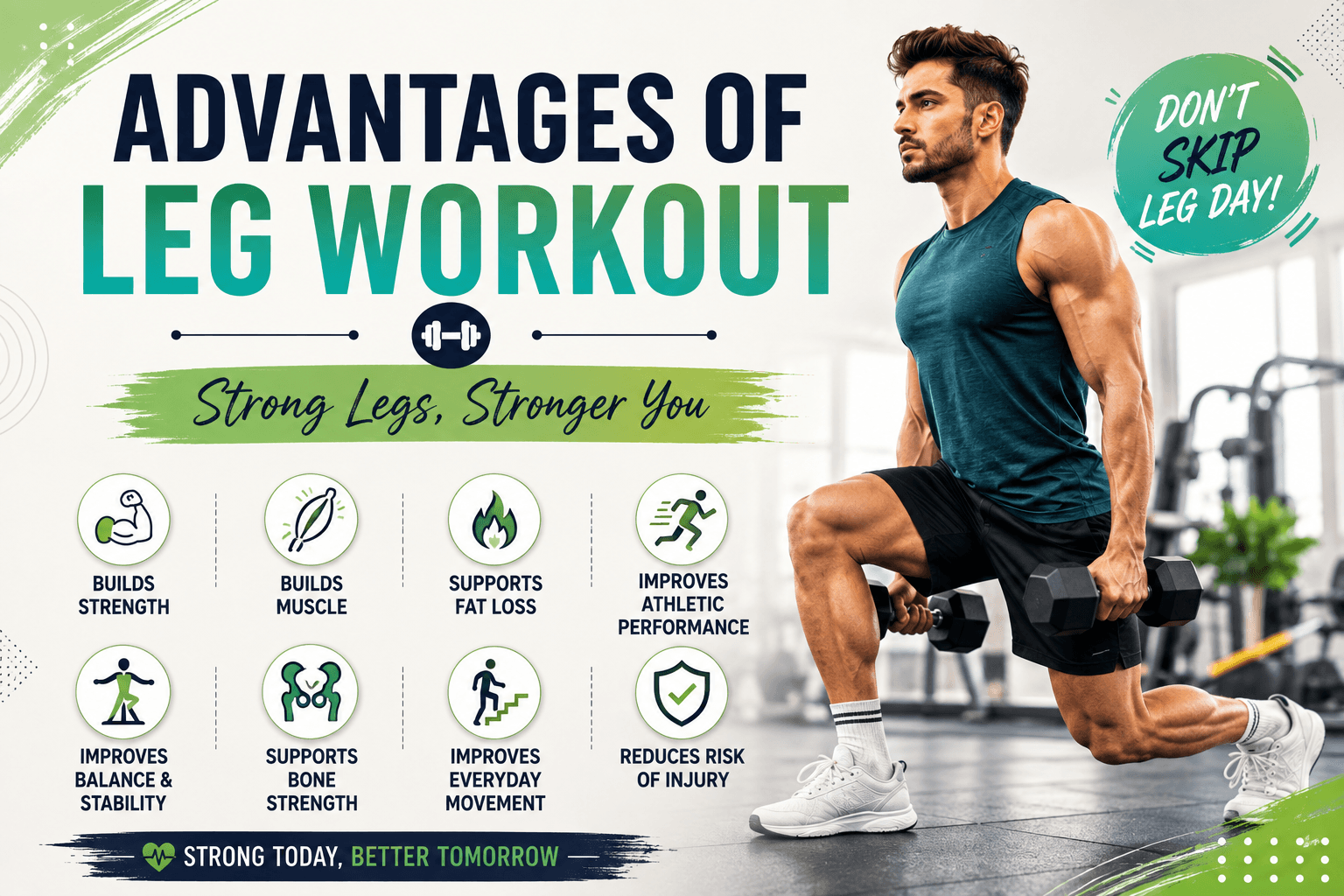
Leg workouts are often considered one of the hardest parts of a fitness routine. Squats, lunges, leg presses, deadlifts, and other lower-body exercises can leave your muscles tired, but that effort comes with many benefits.
Your legs contain some of the largest muscles in your body, including the quadriceps, hamstrings, glutes, and calves. Training these muscles regularly can improve your strength, balance, athletic performance, body composition, and everyday movement.
Whether your goal is to build muscle, lose fat, become stronger, or simply stay fit, leg workouts should be an important part of your exercise routine.
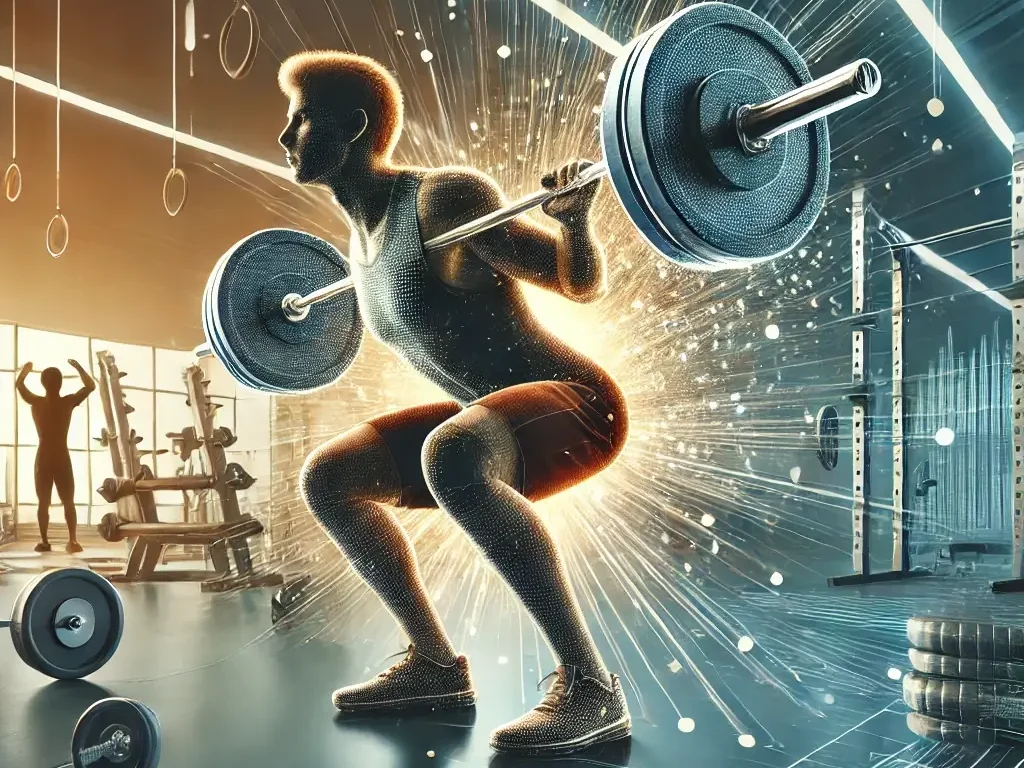
In this article, we will discuss the major advantages of leg workouts and why you should stop skipping leg day.
Table of Contents
1. Builds Stronger Legs
The most obvious advantage of leg workouts is increased lower-body strength.
Exercises such as squats, leg presses, lunges, Romanian deadlifts, and calf raises place resistance on the muscles of your legs. With consistent training and progressive overload, these muscles gradually become stronger.
Strong legs make everyday activities easier. Walking, climbing stairs, standing for long periods, lifting objects, and even maintaining a good posture can become more comfortable.
For beginners, it is not necessary to start with very heavy weights. Learning proper technique and gradually increasing resistance is more important than lifting as much weight as possible.
2. Helps Build Muscle
If you want a muscular and well-proportioned body, training your legs is essential.
The lower body contains large muscle groups, particularly the glutes and quadriceps. Exercises that target these muscles can stimulate muscle growth when combined with proper nutrition, adequate protein, and recovery.
A balanced physique isn’t only about having a bigger chest and arms. Well-developed legs can give your body a more athletic and proportionate appearance.
Leg training can also help you develop stronger glutes and hamstrings, which are important for overall lower-body development.
3. Supports Fat Loss
Leg workouts can be useful when your goal is to lose body fat.
Because leg exercises involve large muscle groups, compound movements such as squats and lunges can require considerable effort. A challenging workout can increase your overall energy expenditure.
However, it’s important to understand that leg workouts alone don’t specifically burn leg fat. Fat loss happens when you consistently maintain an appropriate calorie deficit through a combination of nutrition and physical activity.
Combining strength training with a healthy diet and regular cardiovascular activity can be an effective approach for improving body composition.
4. Improves Athletic Performance
Strong legs are important for almost every sport and physical activity.
Running, jumping, cycling, football, cricket, basketball, and many other sports require strong and powerful lower-body muscles.
Exercises such as squats, lunges, step-ups, and deadlift variations can help develop strength and stability that transfer to different physical activities.
For athletes, leg training can also be programmed according to their sport. For example, an athlete who needs explosive movement may include exercises that develop power, while endurance athletes may focus more on muscular endurance.
5. Improves Balance and Stability
Your legs play an important role in keeping your body stable.
Strong quadriceps, hamstrings, glutes, calves, and supporting muscles can help you maintain better control during movement.
Single-leg exercises such as lunges, Bulgarian split squats, and step-ups can be particularly useful because they challenge each side of the body independently.
Better balance isn’t only useful for athletes. It can also help with everyday movements and reduce the likelihood of losing stability during physical activities.
6. Strengthens Your Glutes
The glutes are among the strongest muscle groups in the human body and are involved in many movements.
Squats, hip thrusts, lunges, step-ups, and deadlift variations can all train the glute muscles to different degrees.
Strong glutes can contribute to better hip stability and lower-body strength. They also play an important role when running, jumping, climbing stairs, and changing direction.
If your goal is to develop stronger and more muscular glutes, a properly structured lower-body workout can be very effective.
7. Supports Stronger Bones
Resistance training doesn’t only train muscles. It can also provide mechanical stress that supports bone health.
Weight-bearing exercises such as squats, lunges, and other resistance exercises can be useful components of an overall fitness program designed to maintain strong bones.
This becomes particularly important as people get older because maintaining muscle strength and bone health can support independence and physical function.
If you have an existing bone or joint condition, however, it’s a good idea to speak with a qualified healthcare professional before starting a new exercise program.
8. Improves Everyday Movement
You don’t need to be an athlete to benefit from stronger legs.
Think about the activities you perform every day: getting up from a chair, climbing stairs, carrying groceries, walking, bending down, or getting into a vehicle.
All of these movements involve your lower body.
Regular leg training can improve your ability to perform these movements efficiently. Strength training also teaches you to control your body against resistance, which can be useful for everyday physical tasks.
9. Helps Improve Posture and Body Control
Although posture involves the entire body, lower-body strength can contribute to better overall body control.
Your glutes, hamstrings, and core work together to stabilize your pelvis and support movement.
Exercises that require controlled positioning, such as squats and split squats, can help you become more aware of how your body moves.
Good technique matters here. Performing exercises with poor form or using excessive weight can increase unnecessary stress on your joints and muscles.
10. Increases Lower-Body Endurance
Leg workouts aren’t only about maximum strength or muscle size.
Training with appropriate repetitions and resistance can also improve muscular endurance.
For example, activities such as hiking, cycling, running, playing cricket, or spending a long day on your feet require your leg muscles to work repeatedly.
A well-designed leg workout can help your muscles handle physical activity for longer periods.
11. Creates a More Balanced Physique
One common mistake in the gym is focusing heavily on the upper body while ignoring the lower body.
Training your chest, shoulders, arms, and back while skipping legs can create an unbalanced physique.
A complete fitness program should train both the upper and lower body.
You don’t necessarily need to train legs every day. For many people, one or two properly planned lower-body sessions per week can be enough, depending on their goals, experience, recovery, and overall training schedule.
12. Can Boost Your Confidence
Progress in the gym can have a positive effect on confidence.
When you gradually increase your squat, improve your technique, complete more repetitions, or notice stronger legs, you can see evidence of your progress.
Physical changes can also contribute to confidence, but the biggest benefit is often knowing that you are becoming stronger and more capable.
The key is to focus on your own progress rather than comparing your body or strength with someone else.
Best Leg Exercises for Beginners
If you’re new to strength training, you don’t need a complicated leg workout.
Some beginner-friendly exercises include:
- Bodyweight squats
- Goblet squats
- Lunges
- Step-ups
- Leg press
- Leg curls
- Leg extensions
- Glute bridges
- Calf raises
Start with manageable resistance and focus on learning proper movement.
As you become more experienced, you can gradually increase the resistance, repetitions, or training volume.
How Often Should You Train Legs?
For most beginners, training the legs once or twice per week can be a practical starting point.
Give your muscles enough time to recover between demanding workouts. Recovery is an important part of building strength and muscle.
Your workout frequency should depend on your experience, training goals, exercise selection, sleep, nutrition, and how well you recover.
More training isn’t automatically better.
Don’t Forget Nutrition and Recovery
A good leg workout is only one part of the equation.
If your goal is muscle growth, your body needs enough calories, protein, carbohydrates, micronutrients, and sleep to support recovery.
Protein-rich foods such as eggs, milk, curd, paneer, chicken, fish, soy, lentils, beans, and other protein sources can help you meet your daily protein needs.
Sleep is also important. Giving your body sufficient recovery time can help you perform better during your next workout.
Final Thoughts
Leg workouts are much more than a way to build bigger thighs. They can help you develop strength, muscle, balance, endurance, athletic ability, and better overall physical function.
The key is consistency. You don’t need to destroy your legs every workout or lift extremely heavy weights. Focus on proper technique, gradually increase the challenge, eat appropriately, and give your body enough time to recover.
If you’ve been skipping leg day, it may be time to change your approach.
A strong body needs strong legs — so make lower-body training a regular part of your fitness routine.
Remember: Train smart, progress gradually, and never sacrifice proper form just to lift heavier weight.
Kapil Kumar
Founder & Fitness Trainer – FITLIS
- 🏋️ 9+ years of fitness coaching
- 💪 Specializes in weight loss and muscle building
- 📺 YouTube: @fitlisfitness
- Instagram: @kapilkumar_79
- Facebook: @kapilkumar.7790
- GYM App: @fitlisgym