
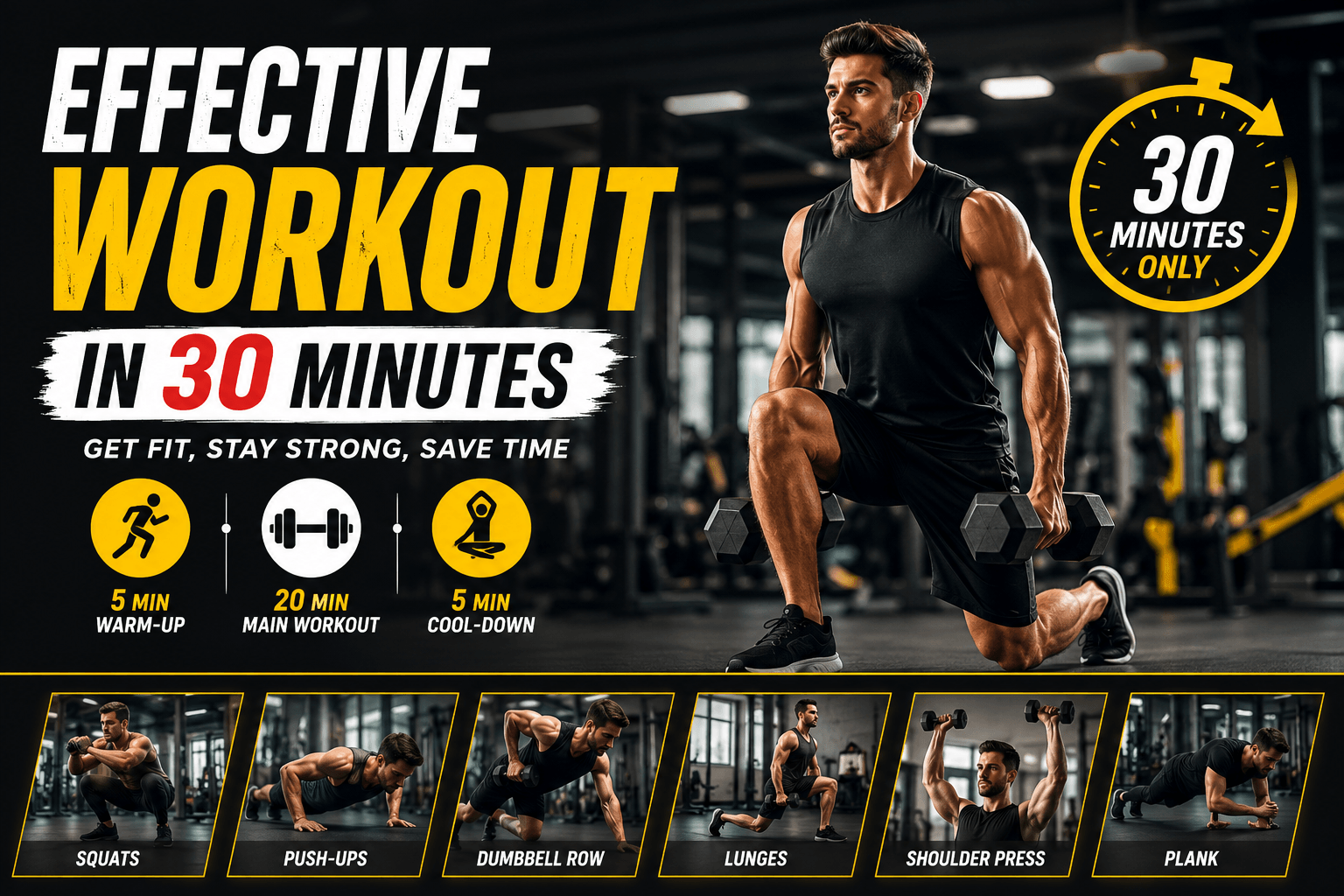
A Complete Guide for Busy People.
Finding time for exercise can be difficult when you have a busy job, family responsibilities, travel, and everyday tasks. Many people believe that a good workout requires one or two hours at the gym. The truth is that you can get an effective workout in just 30 minutes if you use your time wisely.
A short workout can improve your strength, cardiovascular fitness, mobility, and overall health. The key is not spending more time exercising—it is making the most of the time you have.
In this guide, we will explain how to structure a 30-minute workout, which exercises you can include, and how to make your short gym sessions more effective.
Table of Contents
Can You Really Get a Good Workout in 30 Minutes?
Yes. A 30-minute workout can be highly effective when it is properly planned.
Instead of spending a lot of time between exercises, you can focus on movements that train multiple muscle groups at once. Compound exercises such as squats, push-ups, rows, lunges, and presses allow you to work several muscles simultaneously.
The intensity of your workout should also match your fitness level. You don’t need to lift extremely heavy weights or train until exhaustion every day. Consistency, proper technique, and gradual progression are more important.
A 30-minute workout done consistently is usually much better than planning a two-hour workout and skipping it because you don’t have enough time.
How to Divide Your 30-Minute Workout
One simple way to organize your workout is:
- 5 minutes: Warm-up
- 20 minutes: Main workout
- 5 minutes: Cool-down
This structure gives you enough time to prepare your body, complete meaningful exercises, and finish with a short recovery period.
If you are experienced and already warm, you may be able to spend more time on the main workout. However, beginners should not skip the warm-up.
5-Minute Warm-Up
A warm-up prepares your muscles and joints for exercise. It can also help you move more comfortably during your workout.
Start with 2–3 minutes of light movement, such as:
- Walking
- Light jogging
- Cycling
- Jumping jacks
Then spend another couple of minutes performing dynamic movements such as:
- Arm circles
- Bodyweight squats
- Hip rotations
- Walking lunges
- Shoulder movements
Avoid turning your warm-up into a full workout. The goal is to gradually prepare your body for the exercises ahead.
20-Minute Full-Body Workout
If you only have 20 minutes for the main workout, a full-body routine can be an excellent choice.
You can perform the following exercises:
1. Squats
Squats primarily work your quadriceps, glutes, and hamstrings while also challenging your core.
Perform 10–15 repetitions.
Keep your chest controlled, push your hips back, and make sure your knees track comfortably in the direction of your toes.
Beginners can start with bodyweight squats. As they become stronger, they can gradually add resistance.
2. Push-Ups
Push-ups are a simple bodyweight exercise that works the chest, shoulders, triceps, and core.
Perform 8–15 repetitions based on your fitness level.
If standard push-ups are difficult, start with incline push-ups using a stable bench or elevated surface.
Focus on maintaining a straight body position rather than simply trying to complete more repetitions.
3. Dumbbell Rows
Rows help strengthen your upper back, rear shoulders, and arms.
Perform 10–12 repetitions per side.
Keep your back in a comfortable neutral position and pull the dumbbell toward your body in a controlled manner.
Don’t use momentum to lift the weight. A lighter weight with good technique is better than a heavy weight that compromises your form.
4. Lunges
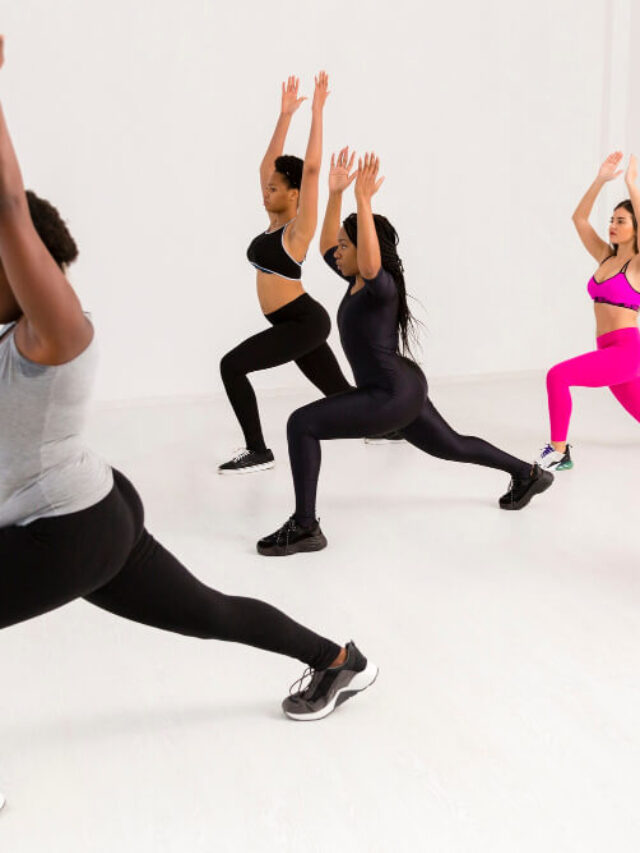
Lunges train the legs and glutes while also challenging balance and coordination.
Perform 8–12 repetitions per leg.
You can perform stationary lunges if walking lunges are uncomfortable or you have limited space.
As your strength improves, you can hold dumbbells to increase the challenge.
5. Dumbbell Shoulder Press
The shoulder press targets the shoulders and triceps.
Perform 8–12 repetitions.
Choose a weight that allows you to maintain good technique throughout the set. Avoid excessively arching your lower back while pressing.
6. Plank
Finish your main workout with a plank to challenge your core.
Hold the position for approximately 20–45 seconds, depending on your fitness level.
Keep your body aligned and avoid allowing your hips to drop excessively or rise too high.
How to Make a 30-Minute Workout More Effective
The biggest challenge with short workouts is wasting time. Here are some simple ways to make your 30 minutes count.
1. Prepare Your Workout Before Starting
Know which exercises you are going to perform before you begin.
Searching for exercises between sets can waste valuable workout time. Having a plan allows you to move from one exercise to the next without unnecessary delays.
2. Use Compound Exercises
Compound movements train multiple muscles at the same time.
Examples include:
- Squats
- Deadlifts
- Push-ups
- Rows
- Lunges
- Shoulder presses
These exercises can be especially useful when you have limited time.
3. Control Your Rest Periods
Rest is important, but excessively long breaks can reduce the amount of work you complete.
For many general fitness workouts, around 30–90 seconds of rest may be appropriate depending on the exercise and your fitness level.
Heavy strength-focused exercises may require longer recovery.
4. Try Supersets
A superset involves performing two exercises back-to-back with little or no rest between them.
For example:
Superset 1
- Squats × 12
- Push-ups × 10
Rest for 60 seconds and repeat.
Superset 2
- Dumbbell rows × 12
- Lunges × 10 per leg
Rest and repeat.
Supersets can help you use your workout time efficiently while keeping the session challenging.
5. Focus on Technique
A short workout doesn’t mean you should rush through every repetition.
Good exercise technique should always be a priority.
Perform each movement under control and use a resistance level that you can handle safely. Increasing weight too quickly can increase the risk of poor technique and unnecessary strain.
Example 30-Minute Gym Workout
Here is a simple routine you can use as a starting point:
0–5 minutes — Warm-up
- 2 minutes brisk walking or cycling
- 10 bodyweight squats
- 10 arm circles
- 10 walking lunges
- Light mobility movements
5–25 minutes — Main workout
Perform 3 rounds:
- Squats — 12 reps
- Push-ups — 10 reps
- Dumbbell rows — 10 reps each side
- Lunges — 10 reps each leg
- Shoulder press — 10 reps
- Plank — 30 seconds
Take short breaks when needed.
25–30 minutes — Cool-down
Finish with light walking and gentle stretching.
Remember that this is a general example. Your workout should be adjusted according to your fitness level, goals, available equipment, and any physical limitations.
Can a 30-Minute Workout Help With Weight Loss?
A 30-minute workout can contribute to weight loss, but exercise is only one part of the equation.
Your overall calorie intake, food choices, daily activity, sleep, and consistency also matter.
Strength training can help you maintain and develop muscle, while cardiovascular exercise can improve your fitness and increase energy expenditure.
For weight management, focus on creating sustainable habits rather than trying to burn as many calories as possible during every workout.
Walking more throughout the day, taking the stairs, staying active at work, and reducing unnecessary sitting can also contribute to your overall activity level.
How Many Days a Week Should You Exercise?
For general fitness, many adults can benefit from regular physical activity throughout the week.
A practical starting point is 3–5 workout sessions per week, depending on your schedule and fitness level.
For beginners, three full-body sessions per week can be enough to establish a strong routine.
You don’t need to train intensely every day. Recovery is an important part of fitness because your body needs time to adapt to training.
Common Mistakes During Short Workouts
Some people make their workouts harder than necessary because they believe intensity always means better results.
Avoid these mistakes:
Skipping the warm-up: Even a few minutes of preparation can help you get ready for exercise.
Using too much weight: Heavy weights are not automatically better. Choose resistance that allows good technique.
Doing too many exercises: You don’t need 15 different exercises in one session. Focus on a few effective movements.
Taking excessively long breaks: Long phone breaks can quickly turn a 30-minute workout into a much longer session.
Ignoring recovery: Training hard without adequate recovery can make it difficult to maintain consistency.
Final Thoughts
You don’t need to spend hours in the gym to make progress. A 30-minute workout can be effective when it is structured properly and performed consistently.
Focus on compound exercises, keep unnecessary rest to a minimum, use proper technique, and gradually increase the challenge as your fitness improves.
Most importantly, don’t wait for the perfect schedule. If you only have 30 minutes today, use those 30 minutes.
Over time, consistent short workouts can become a sustainable part of your lifestyle and help you build better strength, fitness, and overall health.
Remember: 30 minutes of consistent exercise is better than two hours of exercise that you keep postponing.
Kapil Kumar
Founder & Fitness Trainer – FITLIS
- 🏋️ 9+ years of fitness coaching
- 💪 Specializes in weight loss and muscle building
- 📺 YouTube: @fitlisfitness
- Instagram: @kapilkumar_79
- Facebook: @kapilkumar.7790
- GYM App: @fitlisgym