
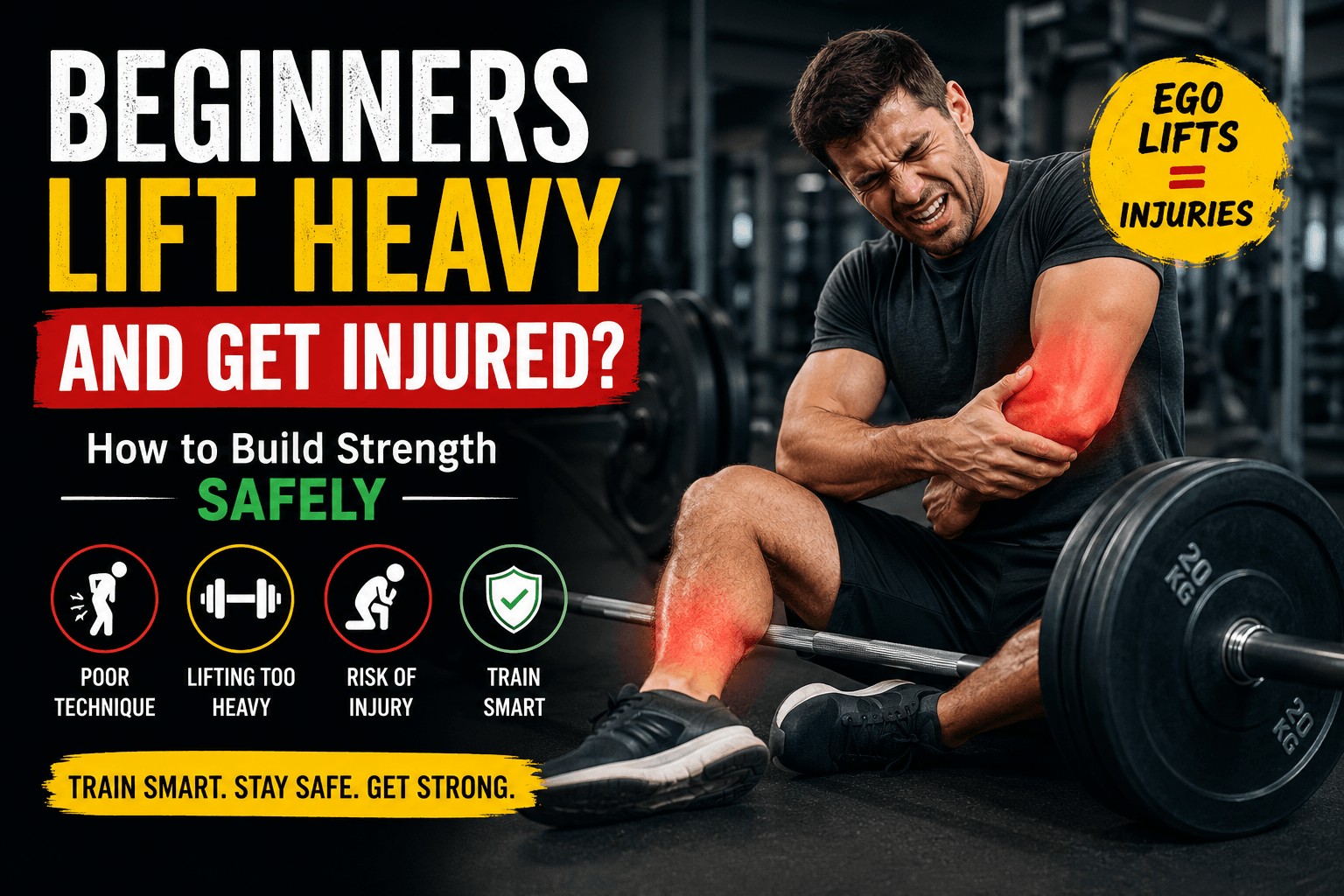
Beginners Lift Heavy and Get Injured? The Truth Every New Gym Member Should Know
One of the biggest mistakes beginners make in the gym is trying to lift weights that are far too heavy. Many new gym members believe that lifting heavy from the very first day will help them build muscle faster. Unfortunately, this mindset often leads to pain, injuries, frustration, and even quitting the gym altogether.
If you’ve ever wondered, “Should beginners lift heavy weights?”, the short answer is No—not at the beginning. Strength training is a journey, and every journey starts with learning the basics.
In this guide, you’ll learn why beginners get injured, the most common lifting mistakes, and how to safely increase strength without putting your body at risk.

Why Do Beginners Try to Lift Heavy?
Social media has changed the way people think about fitness. Every day, beginners watch experienced athletes lifting massive weights and assume that’s how muscle is built.
Some common reasons beginners lift too heavy include:
- Trying to impress friends
- Comparing themselves with experienced gym members
- Believing heavier weights equal faster muscle growth
- Copying influencers without understanding proper technique
- Lack of guidance from a trainer
The reality is that experienced lifters spent years developing their strength. What looks easy on Instagram often represents years of consistent training.
What Happens When Beginners Lift Too Heavy?
Your muscles may not be the weakest part of your body.
Your tendons, ligaments, joints, and stabilizing muscles need time to adapt to resistance training.
When you suddenly lift weights beyond your current ability, your body compensates with poor movement patterns, increasing injury risk.
Common problems include:
- Muscle strains
- Shoulder injuries
- Lower back pain
- Knee pain
- Wrist pain
- Elbow pain
- Neck stiffness
- Torn ligaments
- Poor posture
- Long recovery periods
Instead of making progress, many beginners spend weeks recovering.
Common Injuries Caused by Lifting Heavy Too Soon
1. Lower Back Injury
Deadlifts and squats performed with poor technique place enormous stress on the lower back.
Common symptoms:
- Sharp pain while bending
- Difficulty standing upright
- Muscle spasms
2. Shoulder Pain
Heavy bench presses and overhead presses often cause shoulder problems when mobility and technique are poor.
Signs include:
- Pain while lifting arms
- Clicking sounds
- Weakness during pressing exercises
3. Knee Pain
Using excessive weight during squats or lunges without proper control places unnecessary pressure on the knees.
Symptoms include:
- Pain climbing stairs
- Swelling
- Instability
4. Wrist Injuries
Improper grip during bench press, curls, or push-ups can overload the wrists.
5. Muscle Strains
Trying to “max out” before the muscles are prepared often results in muscle pulls.
These injuries commonly affect:
- Hamstrings
- Chest muscles
- Biceps
- Calves
- Lower back
Why Technique Matters More Than Weight
Imagine learning to drive a car.
Would you start by racing on a highway?
Of course not.
You first learn steering, braking, mirrors, and control.
Strength training works the same way.
Your body needs to learn:
- Correct posture
- Proper breathing
- Full range of motion
- Muscle control
- Joint stability
Only after mastering these fundamentals should you gradually increase weight.
Remember:
Perfect form with lighter weights is far more effective than poor form with heavy weights.
Signs You’re Lifting Too Heavy
If you experience any of these, the weight is probably too much:
- Swinging your body to complete repetitions
- Holding your breath throughout the lift
- Losing balance
- Shortening the movement range
- Feeling pain instead of muscle effort
- Unable to control the lowering phase
- Needing excessive assistance every set
If your form breaks down, reduce the weight immediately.
How Beginners Should Start Strength Training
A safe beginner program focuses on movement quality rather than ego.
Week 1–4
Use light weights that allow you to perform:
- 10–15 repetitions
- 2–3 sets
- Controlled movement
- Good posture
Focus on learning exercises like:
- Bodyweight squats
- Push-ups (or incline push-ups)
- Lat pulldowns
- Dumbbell rows
- Dumbbell shoulder press
- Planks
- Glute bridges
Progressive Overload: The Safe Way to Build Strength
Muscles grow when they are challenged gradually.
Instead of adding 10 kg in one session, increase weight slowly.
For example:
Week 1: 5 kg
Week 2: 5 kg
Week 3: 6 kg
Week 4: 6 kg
Week 5: 7 kg
This gradual approach allows muscles, joints, and connective tissues to adapt safely.
Never Skip Warm-Up
Many injuries occur before the actual workout even begins because beginners skip warming up.
Spend 5–10 minutes on:
- Light cardio
- Dynamic stretches
- Arm circles
- Hip mobility drills
- Bodyweight squats
- Shoulder mobility exercises
A proper warm-up increases blood flow, improves flexibility, and prepares your nervous system for lifting.
Recovery Is Part of Muscle Growth
Muscles don’t grow while you’re lifting.
They grow while you’re recovering.
Beginners should prioritize:
- 7–9 hours of quality sleep
- Adequate protein intake
- Hydration
- Rest days
- Gentle stretching after workouts
Ignoring recovery increases fatigue and injury risk.
Should Beginners Lift to Failure?
Training to failure means continuing an exercise until you cannot complete another repetition.
While advanced athletes sometimes use this technique strategically, beginners generally do not need it.
Stopping with 1–3 repetitions left “in the tank” helps maintain good form, reduces injury risk, and supports consistent progress.
The Role of a Qualified Trainer
A knowledgeable trainer can help beginners:
- Learn proper lifting technique
- Choose suitable exercises
- Correct posture
- Build a personalized workout plan
- Progress safely over time
- Reduce the chance of avoidable injuries
If you’re new to resistance training, even a few coaching sessions can make a big difference.
Nutrition Supports Safe Progress
Lifting weights is only one part of getting stronger.
Your body also needs proper nutrition to recover and adapt.
Key nutritional habits include:
- Eat enough protein from foods like eggs, dairy, fish, chicken, beans, tofu, or lentils.
- Include complex carbohydrates for workout energy.
- Consume healthy fats from nuts, seeds, and olive oil.
- Drink enough water throughout the day.
- Avoid relying solely on supplements—whole foods should be the foundation of your diet.
Smart Tips for Every Beginner
Follow these simple habits:
- Learn technique before increasing weight.
- Keep a workout journal to track progress.
- Increase weight gradually.
- Don’t compare yourself with experienced lifters.
- Listen to your body.
- Rest when you feel unusually sore or fatigued.
- Stay consistent instead of chasing quick results.
- Celebrate improvements in form, strength, and confidence—not just heavier weights.
Final Thoughts
Lifting heavy isn’t dangerous by itself—lifting too heavy, too soon, and with poor technique is.
The strongest lifters in the gym didn’t become strong overnight. They built their strength one workout at a time by mastering the basics, respecting recovery, and progressing gradually.
If you’re just starting your fitness journey, don’t let your ego choose the weight. Let your technique guide your progress. By focusing on proper form, consistent training, smart recovery, and gradual overload, you’ll reduce your risk of injury and build a stronger, healthier body that can keep improving for years to come.
Remember: fitness is a marathon, not a sprint. Train smart today so you can continue training tomorrow.
References
- World Health Organization (WHO). Physical Activity Guidelines. https://www.who.int/news-room/fact-sheets/detail/physical-activity
- American College of Sports Medicine (ACSM). Exercise Guidelines. https://www.acsm.org/education-resources/trending-topics-resources
- CDC. Benefits of Physical Activity. https://www.cdc.gov/physical-activity/index.html
Kapil Kumar
Founder & Fitness Trainer – FITLIS
- 🏋️ 9+ years of fitness coaching
- 💪 Specializes in weight loss and muscle building
- 📺 YouTube: @fitlisfitness
- Instagram: @kapilkumar_79
- Facebook: @kapilkumar.7790
- GYM App: @fitlisgym