
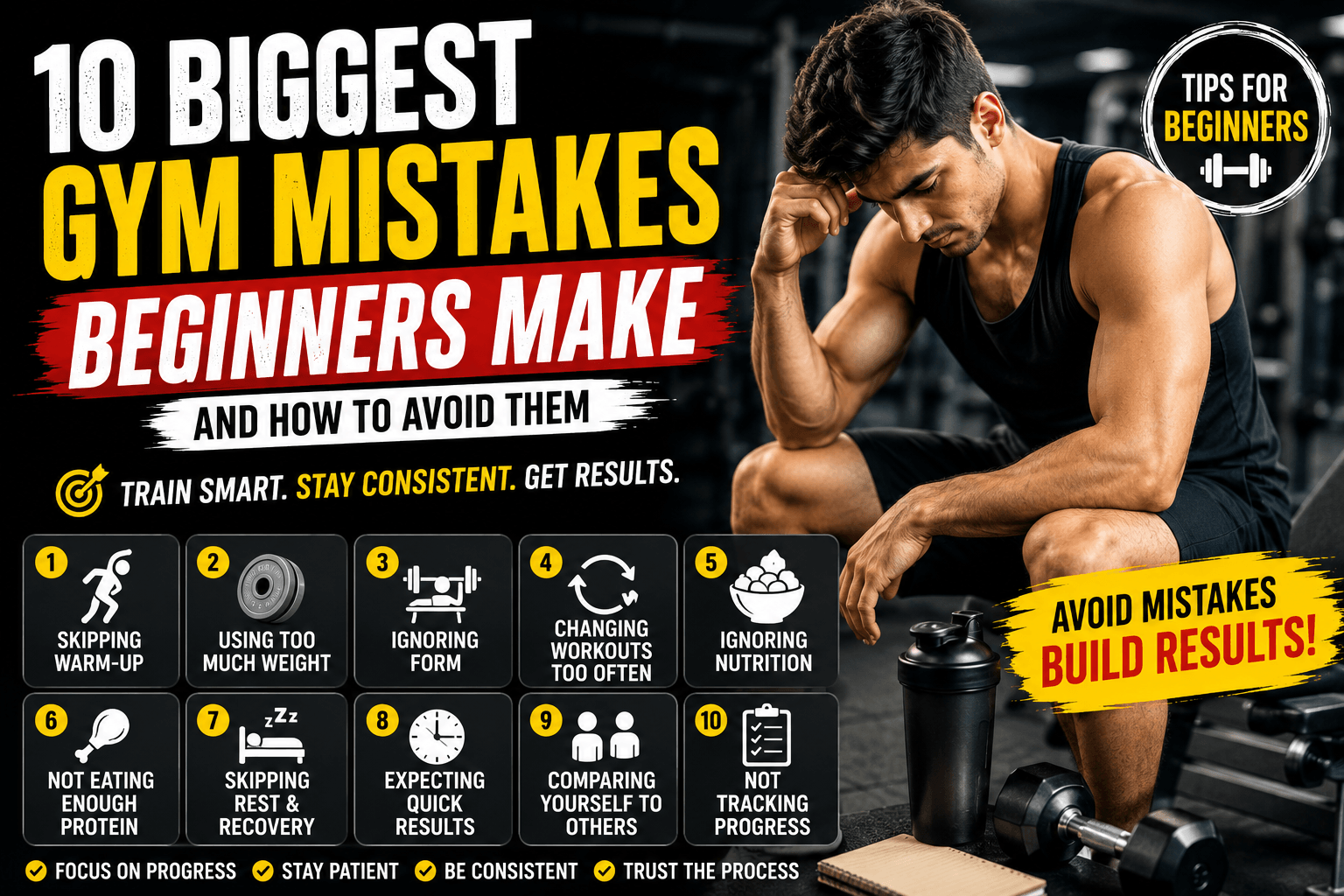
As you know that Many people join a gym but few people consistent. Most beginners quit after a few weeks or even get injured because they make common mistakes
Joining a gym is one of the best decisions you can make for your health. Whether your goal is to lose weight, build muscle, improve strength, or simply stay active, consistency in the gym can completely transform your body and lifestyle.
However, many beginners make common mistakes during their first few months of training. These mistakes often slow down progress, increase the risk of injury, and cause frustration. As a result, many people quit before they start seeing real results.
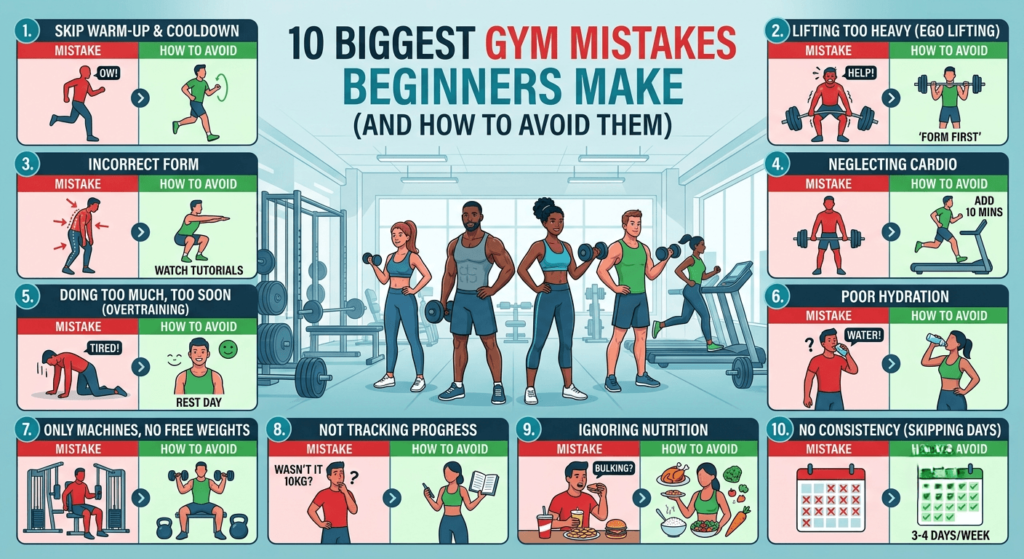
The good news is that these mistakes are completely avoidable.
In this guide, you’ll learn the 10 biggest gym mistakes beginners make and how to avoid them so you can achieve faster, safer, and more sustainable results.
Table of Contents
1. Skipping Warm-Up
Many beginners walk into the gym and immediately start lifting heavy weights.
This is one of the most common mistakes.
A proper warm-up prepares your muscles, joints, and nervous system for exercise. It also improves mobility and reduces the risk of injury.
A simple warm-up should include:
- 5–10 minutes of brisk walking or cycling
- Dynamic stretching
- Light warm-up sets before heavy exercises
Never skip this important step.
2. Using Too Much Weight
One of the biggest beginner mistakes is trying to lift heavier weights just to impress others.
Using weights that are too heavy often leads to:
- Poor exercise form
- Increased injury risk
- Reduced muscle activation
- Slow progress
Instead, choose a weight that allows you to perform each repetition with proper technique.
Remember:
Good form always beats heavy weight.

3. Ignoring Proper Exercise Technique
Exercise technique is far more important than the amount of weight you lift.
Incorrect form can cause injuries to your:
- Back
- Knees
- Shoulders
- Neck
Take time to learn every exercise correctly.
Watch qualified demonstrations, ask a certified trainer for guidance, and don’t hesitate to practice with lighter weights until your technique improves.
4. Changing Workouts Every Day
Many beginners constantly switch workout routines after watching different fitness influencers on social media.
Your muscles need consistency to adapt and grow.
Instead of changing exercises every session, follow a structured training program for at least 6–8 weeks before making major changes.
Progress comes from gradual improvement—not constant variation.
5. Ignoring Nutrition
Many people believe that simply going to the gym is enough.
In reality, nutrition plays a huge role in achieving fitness goals.
For muscle gain:
- Eat enough protein.
- Consume sufficient calories.
- Include healthy carbohydrates and fats.
For fat loss:
- Maintain a calorie deficit.
- Prioritize protein.
- Eat plenty of vegetables and whole foods.
You cannot out-train a poor diet.
6. Not Getting Enough Protein
Protein is essential for muscle recovery and growth.
Many beginners eat very little protein while expecting fast muscle gain.
Good protein sources include:
- Eggs
- Chicken
- Fish
- Milk
- Greek yogurt
- Cottage cheese
- Lentils
- Beans
- Soy products
If you struggle to meet your protein needs through food, a protein supplement may help—but whole foods should remain your priority.
7. Skipping Rest and Recovery
More exercise doesn’t always mean better results.
Your muscles grow while recovering—not while lifting weights.
Training every day without proper rest can lead to:
- Fatigue
- Poor performance
- Increased injury risk
- Slower muscle growth
Aim for:
- 7–9 hours of sleep every night
- At least one or two recovery days each week
Recovery is part of the training process.
8. Expecting Quick Results
Many beginners expect visible changes within a few weeks.
Fitness takes time.
Building muscle and losing fat require patience and consistency.
Instead of focusing only on the mirror, celebrate small improvements such as:
- Lifting heavier weights
- Better endurance
- Improved energy
- Better sleep
- Increased confidence
Long-term consistency always wins.
9. Comparing Yourself to Others
Every person’s fitness journey is different.
Your genetics, age, training experience, nutrition, and lifestyle all influence your progress.
Comparing yourself to experienced gym members or fitness influencers often leads to disappointment.
Instead, compare yourself to who you were last month.
Your only competition is yesterday’s version of yourself.
10. Not Tracking Progress
If you don’t measure your progress, it’s difficult to know whether your program is working.
Track important metrics such as:
- Body weight
- Waist measurement
- Progress photos
- Workout performance
- Strength improvements
Even if the scale doesn’t change, you may still be gaining muscle and losing fat.
Tracking helps you stay motivated and make smarter adjustments.
Bonus Tips for Beginners
If you’re new to the gym, follow these simple rules:
- Learn compound exercises first.
- Stay hydrated.
- Eat balanced meals.
- Train consistently.
- Don’t skip leg day.
- Focus on gradual progress.
- Be patient.
Small improvements every week lead to major transformations over time.
Sample Beginner Gym Routine
Day 1 – Chest & Triceps
- Bench Press
- Incline Dumbbell Press
- Push-ups
- Triceps Pushdown
Day 2 – Back & Biceps
- Lat Pulldown
- Seated Row
- Dumbbell Row
- Bicep Curl
Day 3 – Legs
- Squats
- Leg Press
- Lunges
- Calf Raises
Day 4 – Shoulders
- Shoulder Press
- Lateral Raise
- Rear Delt Fly
- Shrugs
Day 5 – Full Body or Cardio
- Walking
- Cycling
- Plank
- Stretching
Common Gym Myths
Myth 1: More Sweat Means More Fat Loss
Fact: Sweating is your body’s cooling system. It doesn’t directly measure fat loss.
Myth 2: Lifting Weights Makes Beginners Too Muscular
Fact: Building significant muscle takes years of consistent training and nutrition.
Myth 3: Cardio Is the Only Way to Lose Fat
Fact: Strength training combined with proper nutrition is equally important for fat loss.
Myth 4: Supplements Are More Important Than Food
Fact: Supplements support your diet—they cannot replace healthy eating habits.
Frequently Asked Questions
How many days should beginners train?
Most beginners achieve excellent results by training 3–5 days per week.
Should beginners do cardio every day?
Moderate cardio is beneficial, but strength training should remain the priority if your goal is muscle gain.
How long should a gym workout last?
A well-planned workout usually takes 45–75 minutes.
When will I start seeing results?
Many beginners notice improvements in strength and energy within a few weeks. Visible body changes often require several weeks to a few months, depending on consistency, nutrition, and individual factors.
Conclusion
Everyone starts as a beginner. The difference between people who succeed and those who quit is not talent—it’s consistency and smart training.
Avoid common mistakes like skipping warm-ups, lifting too heavy, ignoring nutrition, and expecting overnight results. Focus on learning proper technique, eating enough protein, getting quality sleep, and following a structured workout plan.
Fitness is not about being perfect. It’s about making better choices every day.
Stay consistent, trust the process, and you’ll be surprised by how much progress you can make over time.
YouTube link:- https://www.youtube.com/@fitlisfitness?sub_confirmation=1
Website:- http://fitlis.in/
GYM App:- For Android
Instagram KAPIL:- https://www.instagram.com/kapilkumar_79/
Instagram FITLIS:- https://www.instagram.com/fitlis_fitness/
Facebook:- https://www.facebook.com/kapilkumar.7790/