
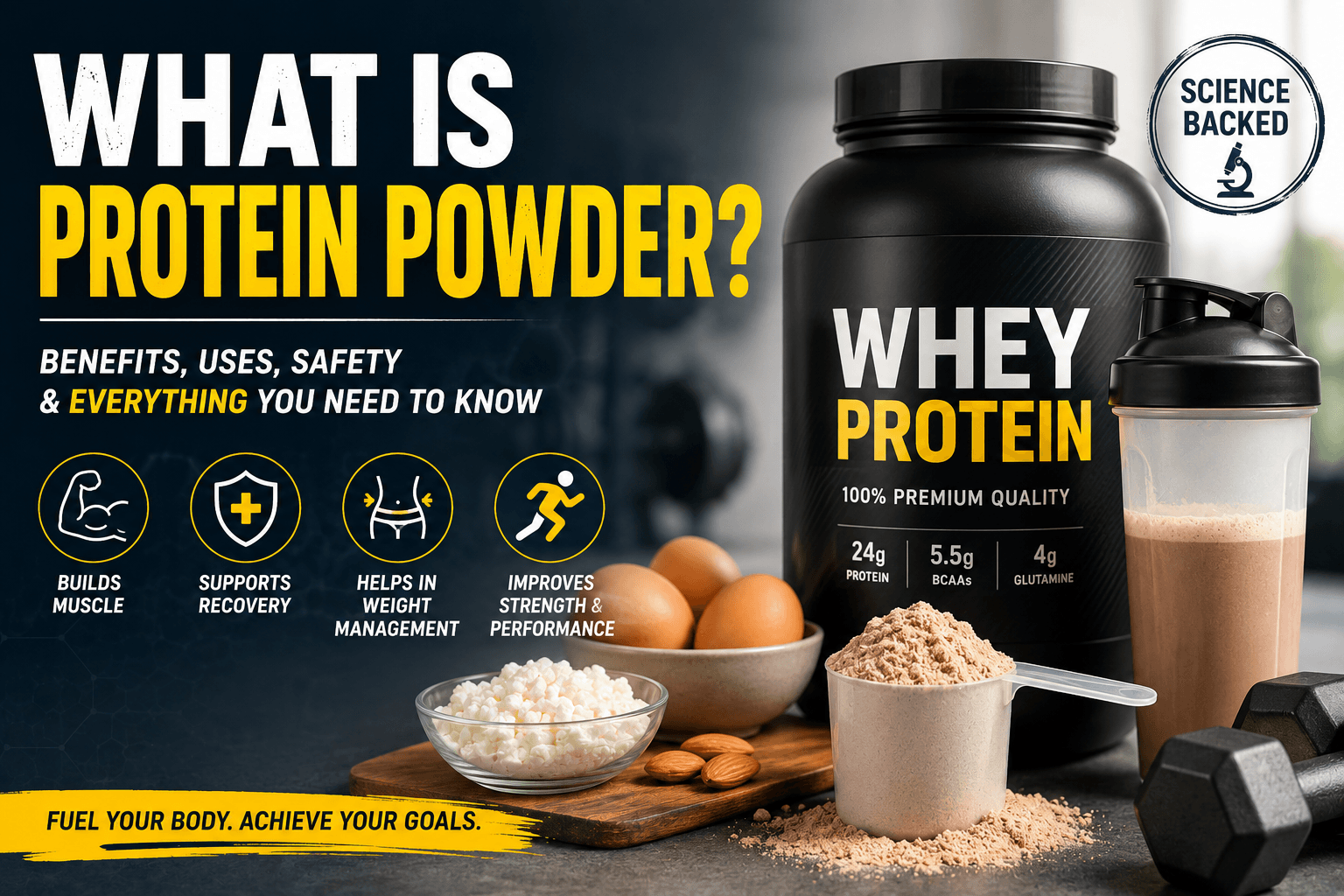
What Is Protein Powder?
If you’ve ever visited a gym, watched a fitness video, or searched for ways to build muscle or lose weight, you’ve probably heard about protein powder. However, many people still have questions like:
- Is protein powder a medicine?
- Is it only for bodybuilders?
- Does it damage the kidneys?
- Is it safe for everyday use?
Because of these misconceptions, some people avoid protein powder completely, while others start taking it without understanding whether they actually need it.
In this article, you’ll learn what is protein powder?, how it’s made, who should use it, its benefits, possible risks, and whether it’s the right choice for you.
What Is Protein?
Protein is one of the three major macronutrients your body needs, along with carbohydrates and fats. It plays a vital role in building and repairing muscles, skin, hair, bones, organs, and other body tissues.
Whenever you exercise, recover from an injury, or your body replaces old cells with new ones, protein is involved in the process.
Protein is made up of small building blocks called amino acids. Some amino acids can be produced by your body, while others—known as essential amino acids—must come from your diet.
Without enough protein, your body cannot function efficiently.
What Is Protein Powder?
Protein powder is a dietary supplement designed to help people increase their daily protein intake.
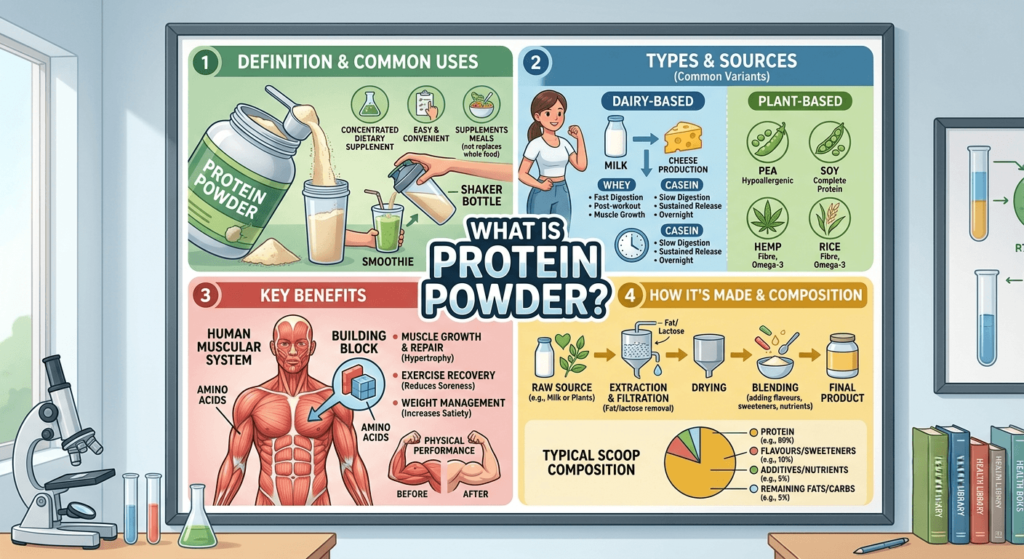
It is made by extracting protein from natural food sources such as:
- Milk
- Soybeans
- Peas
- Eggs
- Brown rice
The extracted protein is filtered, purified, dried, and converted into a fine powder. Many products are then flavored with ingredients like chocolate, vanilla, or strawberry to improve taste.
It’s important to understand that protein powder is not a steroid or a drug. It is simply a concentrated source of dietary protein.
How Is Protein Powder Made?
The most popular type is Whey Protein.
Whey is the liquid that remains after milk is used to make cheese. Manufacturers filter this liquid to remove most of the fats and carbohydrates, leaving behind high-quality protein. The protein is then dried into a powder.
Other common protein powders include:
- Casein Protein – Made from milk
- Soy Protein – Made from soybeans
- Pea Protein – Made from yellow peas
- Egg Protein – Made from egg whites
Since these products come from natural food sources, protein powder is essentially a convenient way to consume protein.
Do You Really Need Protein Powder?
The answer is not always.
If you already consume enough protein through foods like:
- Eggs
- Chicken
- Fish
- Milk
- Yogurt
- Cottage cheese (Paneer)
- Lentils
- Beans
- Soy products
then you may not need a protein supplement.
Protein powder is simply a convenient option when meeting your daily protein needs through food becomes difficult.
Who Can Benefit from Protein Powder?
Protein powder may be useful for:
- People who exercise regularly
- Athletes
- Bodybuilders
- Individuals trying to build muscle
- Busy professionals with limited meal time
- Older adults who struggle to consume enough protein
- Vegetarians or vegans with low protein intake
Remember, it is called a supplement because it supplements your diet—not replaces it.
Does Protein Powder Build Muscle Automatically?
No.
Muscle growth depends on three essential factors:
- Strength training
- Adequate protein intake
- Proper sleep and recovery
Drinking protein shakes without exercising will not magically build muscle.
Protein simply provides the raw material your muscles need after resistance training.
Can Protein Powder Help with Weight Loss?
Yes, it can—but only when combined with a healthy diet.
Protein helps by:
- Keeping you full for longer
- Reducing hunger
- Supporting muscle mass during weight loss
- Increasing the calories your body burns while digesting food
However, protein powder itself is not a fat-burning product.
Weight loss ultimately depends on maintaining a calorie deficit.
Is Protein Powder Safe?
For most healthy adults, high-quality protein powder consumed in recommended amounts is considered safe.
Research has shown that healthy individuals generally do not experience kidney damage from moderate protein intake.
However, people with existing kidney disease, severe liver disease, or certain medical conditions should consult a healthcare professional before using protein supplements.
When Should You Take Protein Powder?
Many people believe protein powder must be consumed immediately after a workout.
In reality, your total daily protein intake matters more than the exact timing.
You can consume protein powder:
- After exercise
- At breakfast
- Between meals
- As a healthy snack
- Whenever you’re unable to meet your protein needs through food
Consistency is more important than timing.
Can Women Use Protein Powder?
Absolutely.
Women require protein just as much as men.
If a woman’s daily protein intake is insufficient through food, protein powder can be a convenient option after consulting a qualified healthcare or nutrition professional.
Protein does not make women excessively muscular.
Can Teenagers Take Protein Powder?
Most teenagers who eat a balanced diet do not need protein supplements.
Young athletes or teenagers with increased protein requirements should only use supplements after guidance from a doctor or registered dietitian.
Whole foods should always remain the primary source of nutrition.
How to Choose a Good Protein Powder
When buying protein powder, consider the following:
- Choose a trusted brand.
- Read the nutrition label carefully.
- Avoid products with excessive added sugar.
- Look for third-party quality testing if available.
- Check the expiry date.
- Don’t believe unrealistic marketing claims.
A quality supplement should support your nutrition—not promise miracle results.
Natural Sources of Protein
Before buying supplements, include these protein-rich foods in your daily diet:
- Eggs
- Milk
- Greek yogurt
- Cottage cheese
- Chicken
- Fish
- Lentils
- Kidney beans
- Chickpeas
- Soybeans
- Tofu
- Sprouts
Whole foods also provide vitamins, minerals, and fiber that supplements cannot fully replace.
Common Myths About Protein Powder
Myth 1: Protein Powder Is a Steroid
Fact: Protein powder and anabolic steroids are completely different products.
Myth 2: Protein Powder Damages the Kidneys
Fact: Current evidence suggests that healthy individuals can safely consume recommended amounts of protein. People with kidney disease should seek medical advice.
Myth 3: Only Bodybuilders Need Protein
Fact: Every person needs protein. The required amount simply varies depending on age, activity level, and health status.
Frequently Asked Questions (FAQs)
Can I take protein powder every day?
Yes, if it fits your nutritional needs and you consume it within recommended amounts.
Does protein powder cause weight gain?
Not by itself. Weight gain occurs when you consistently consume more calories than your body burns.
Can I take protein powder without going to the gym?
Yes. However, if you’re already meeting your protein needs through food, you may not need a supplement.
Is protein powder better than natural food?
No. Whole foods should always be your primary source of nutrition. Protein powder is only meant to fill nutritional gaps.
Conclusion
Protein powder is not a medicine, steroid, or magic muscle-building product. It is simply a convenient source of high-quality protein that can help people meet their daily nutritional requirements.
For most healthy individuals, a balanced diet should always come first. If your daily protein intake is insufficient because of lifestyle, training, or dietary restrictions, protein powder can be a practical and effective supplement.
The key to good health is not relying on supplements—it is maintaining a balanced diet, exercising regularly, sleeping well, and staying consistent.
Remember: Supplements support your nutrition, but healthy habits build lasting results.
YouTube link:- https://www.youtube.com/@fitlisfitness?sub_confirmation=1
Website:- http://fitlis.in/
GYM App:- For Android
Instagram KAPIL:- https://www.instagram.com/kapilkumar_79/
Instagram FITLIS:- https://www.instagram.com/fitlis_fitness/
Facebook:- https://www.facebook.com/kapilkumar.7790/