
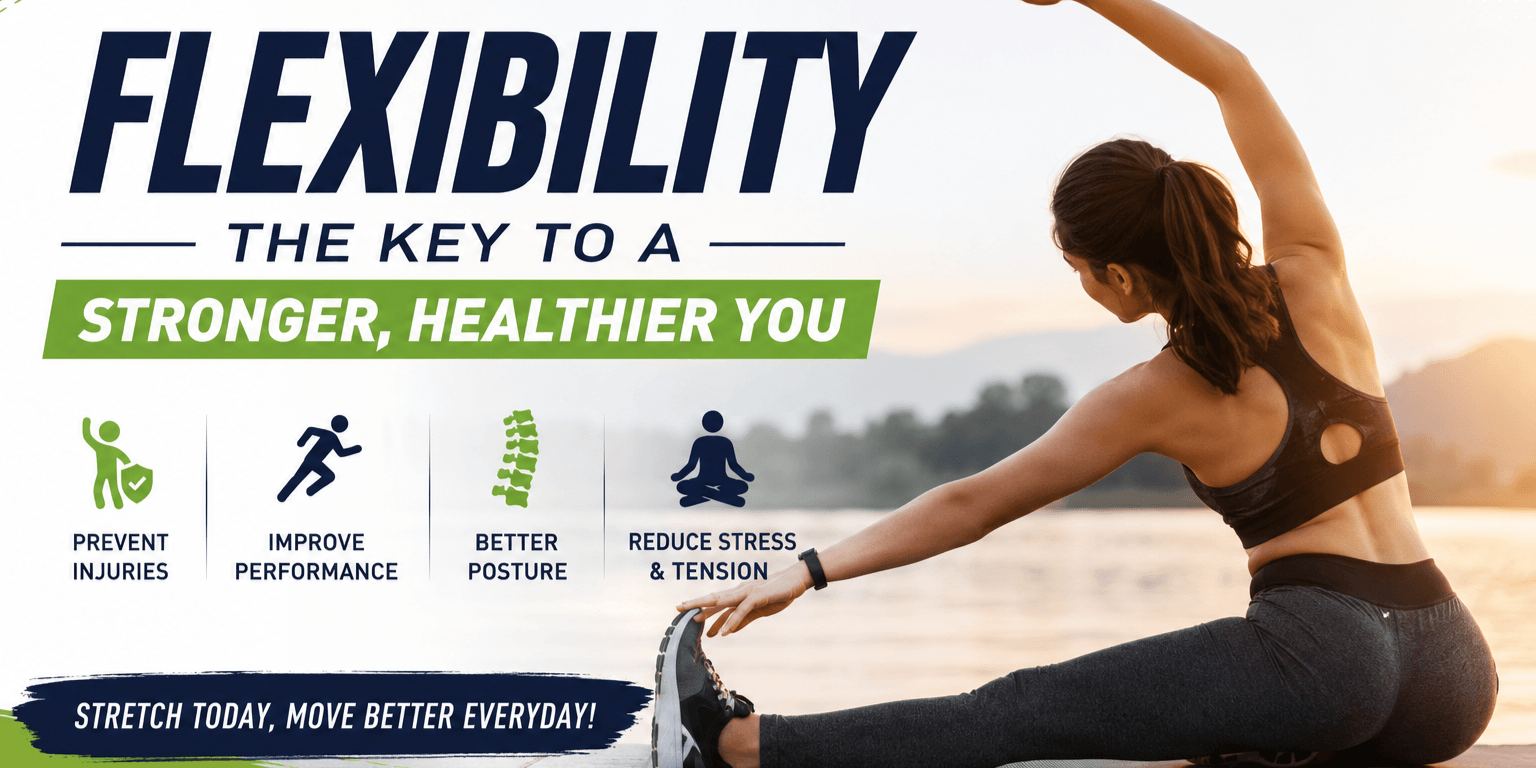
Flexibility is one of the most overlooked aspects of fitness, yet it plays a vital role in maintaining a healthy, active, and pain-free lifestyle. While many people focus on building muscle or losing weight, improving flexibility can significantly enhance overall physical performance, reduce the risk of injury, and improve posture. Whether you’re an athlete, a gym enthusiast, or someone who spends long hours sitting at a desk, flexibility training should be an essential part of your fitness routine.
In this comprehensive guide, we’ll explore what flexibility is, why it matters, its benefits, the best flexibility exercises, and practical tips to improve your mobility safely.
What is Flexibility?
Flexibility is the ability of your muscles, tendons, and joints to move through their full range of motion without discomfort or pain. Good flexibility allows your body to perform everyday activities more efficiently and comfortably.
There are two main types of flexibility:
- Static Flexibility: The ability to hold a stretch while the body remains still.
- Dynamic Flexibility: The ability to move joints and muscles through their full range of motion during movement.
Both forms are important for overall health and physical performance.
Why is Flexibility Important?
Many people believe stretching is only for athletes, but flexibility benefits everyone. Tight muscles can lead to poor posture, joint pain, muscle imbalances, and limited mobility.
Regular flexibility training helps:
- Improve movement efficiency
- Reduce muscle stiffness
- Enhance athletic performance
- Support healthy aging
- Prevent injuries
- Improve posture
- Relieve stress and muscle tension
Top Benefits of Improving Flexibility
1. Reduces Risk of Injury
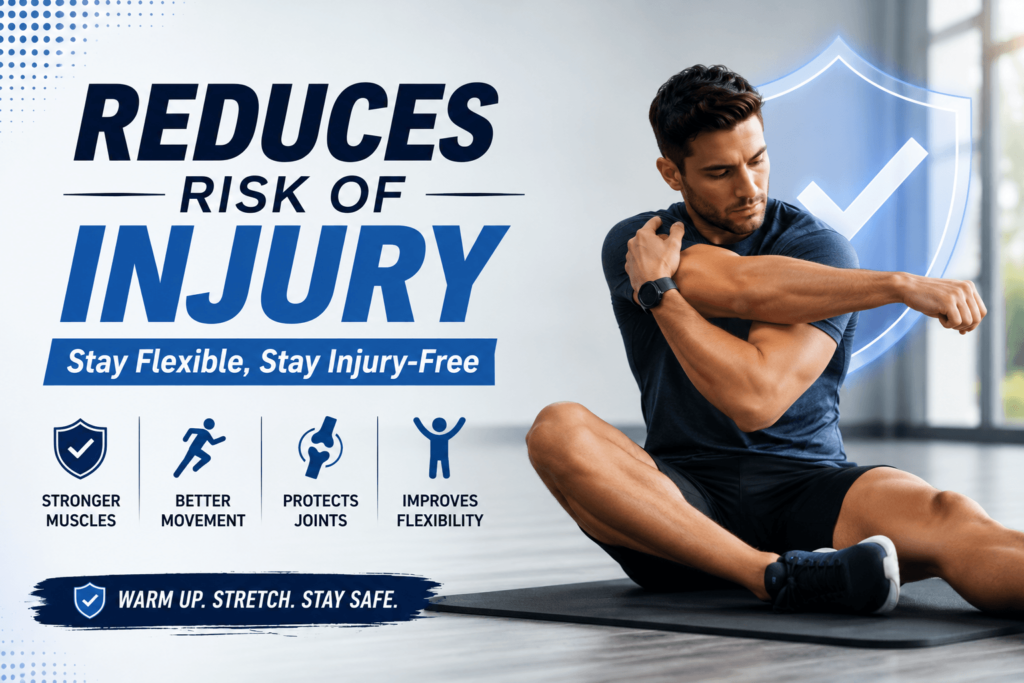
Flexible muscles are less likely to suffer strains or tears during physical activities. They can better absorb stress and sudden movements, reducing the likelihood of injuries during workouts or sports.
2. Improves Posture
Poor posture often results from tight muscles around the hips, shoulders, chest, and lower back. Stretching these muscles regularly helps align the spine and reduces neck and back pain.
3. Increases Athletic Performance
Whether you’re lifting weights, running, cycling, or playing sports, improves movement efficiency. Better mobility allows for deeper squats, smoother running mechanics, and stronger lifting techniques.
4. Reduces Muscle Soreness
Stretching after exercise promotes blood circulation, helping muscles recover more quickly while reducing stiffness and soreness.
5. Enhances Balance and Coordination
Flexible joints allow better body control, which improves balance and lowers the risk of falls, especially in older adults.
6. Improves Blood Circulation
Stretching increases blood flow to muscles, delivering oxygen and nutrients while removing waste products more efficiently.
7. Supports Joint Health
Maintaining a full range of motion helps keep joints healthy and reduces wear and tear over time.
8. Relieves Stress
Stretching relaxes tense muscles and calms the nervous system. Many people experience reduced stress and improved mental well-being after a stretching session.
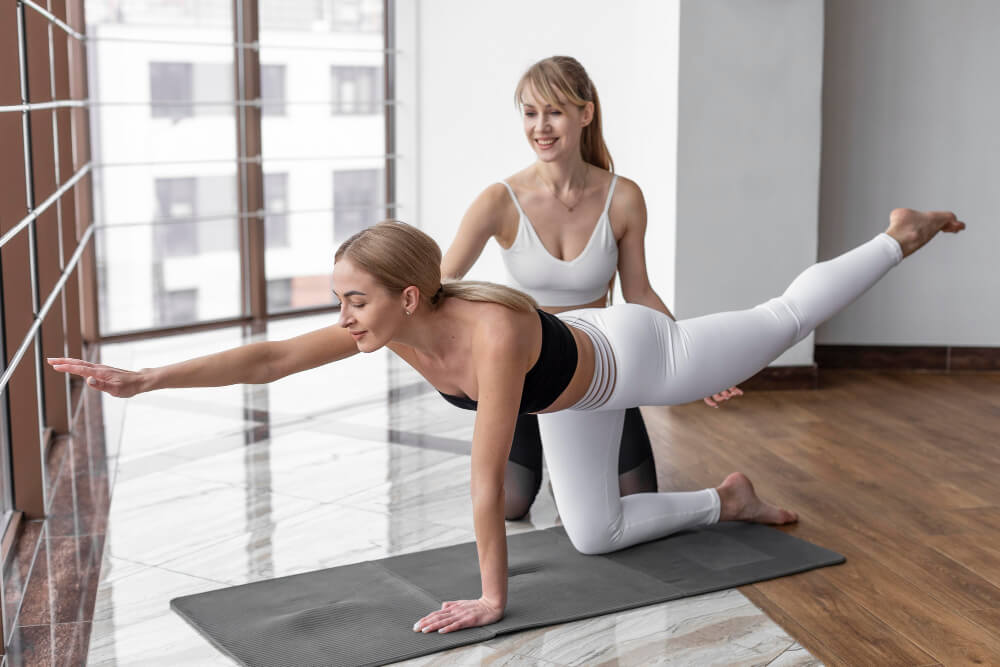
Best Exercises
1. Hamstring Stretch
Sit on the floor with one leg extended and reach toward your toes while keeping your back straight.
Hold: 20–30 seconds
Benefits:
- Reduces lower back tension
- Improves leg flexibility
2. Quadriceps Stretch
Stand on one leg and pull the opposite foot toward your glutes.
Hold: 20–30 seconds
Benefits:
- Loosens thigh muscles
- Improves knee mobility
3. Hip Flexor Stretch
Step into a lunge position while lowering the hips forward.
Benefits:
- Opens tight hips
- Improves posture
- Reduces lower back discomfort
4. Cat-Cow Stretch
Begin on all fours and alternate between arching and rounding your back.
Benefits:
- Improves spinal flexibility
- Relieves back stiffness
5. Child’s Pose
Sit back onto your heels while stretching your arms forward.
Benefits:
- Stretches the back
- Relaxes the shoulders
- Calms the mind
6. Cobra Stretch
Lie on your stomach and push your chest upward while keeping your hips on the floor.
Benefits:
- Opens the chest
- Strengthens the lower back
- Improves spinal mobility
7. Shoulder Stretch
Pull one arm across your chest using the opposite arm.
Benefits:
- Relieves shoulder tightness
- Improves upper-body mobility
8. Butterfly Stretch
Sit with the soles of your feet together and gently press your knees toward the floor.
Benefits:
- Improves hip flexibility
- Reduces groin tightness
Dynamic Stretching Before Exercise
Dynamic stretches prepare your body for movement by increasing blood flow and activating muscles.
Examples include:
- Arm circles
- Leg swings
- Walking lunges
- High knees
- Butt kicks
- Hip circles
- Torso twists
Perform each movement for 30–60 seconds before your workout.
Static Stretching After Exercise
After completing your workout, spend 5–10 minutes performing static stretches.
Focus on:
- Hamstrings
- Quadriceps
- Calves
- Chest
- Back
- Shoulders
- Hip flexors
Holding stretches after exercise helps improve long-term flexibility and aids muscle recovery.
Tips to Improve Flexibility Safely
Warm Up First
Never stretch cold muscles. Perform light cardio such as walking or jogging for 5–10 minutes before stretching.
Stretch Consistently
Flexibility improves gradually. Aim to stretch at least 3–5 times per week.
Don’t Bounce
Use slow, controlled movements. Bouncing while stretching can increase the risk of muscle injury.
Breathe Normally
Take slow, deep breaths during each stretch to help muscles relax.
Avoid Pain
Stretch until you feel mild tension—not pain. Pain indicates you’ve gone too far.
Stay Hydrated
Well-hydrated muscles perform better and recover faster.
Common Mistakes to Avoid
Many people unknowingly reduce the effectiveness of stretching by making these mistakes:
- Skipping warm-ups
- Holding your breath
- Stretching too aggressively
- Ignoring one side of the body
- Stretching inconsistently
- Rushing through stretches
- Poor posture during stretches
Avoiding these habits helps you gain flexibility safely and effectively.
How Long Does It Take to Improve ?
Results vary depending on age, activity level, and consistency.
Most people notice:
- 2–3 weeks: Reduced muscle stiffness
- 4–6 weeks: Improved range of motion
- 8–12 weeks: Significant flexibility gains
Consistency is far more important than long stretching sessions.
Who Should Practice Flexibility Training?
Flexibility training is beneficial for everyone, including:
- Gym beginners
- Bodybuilders
- Athletes
- Runners
- Office workers
- Students
- Senior citizens
- Yoga practitioners
- People recovering from inactivity
Regardless of age or fitness level, incorporating stretching into your routine can improve mobility and overall quality of life.
Conclusion
Flexibility is a key component of overall fitness that often doesn’t receive the attention it deserves. By improving your flexibility, you can move more freely, reduce muscle tension, improve posture, lower your risk of injuries, and enhance your athletic performance. The best part is that you don’t need expensive equipment or hours of training—just a few minutes of regular stretching each day can make a noticeable difference.
Make flexibility training a consistent part of your fitness routine. Pair dynamic stretches before workouts with static stretches afterward, stay patient, and remain consistent. Over time, your body will become more mobile, stronger, and more resilient, allowing you to enjoy everyday activities and exercise with greater comfort and confidence.
Start today—your future body will thank you!
YouTube link:- https://www.youtube.com/@fitlisfitness?sub_confirmation=1
powerlifting competition – https://youtu.be/j-yA6ecK4Hw
check IHFF 2023 bodybuilding competition –https://youtu.be/wqA73RduPNQ
Blogs:- https://fitlis.in/blog
Website:- http://fitlis.in/
GYM App:- For Android
Instagram KAPIL:- https://www.instagram.com/kapilkumar_79/
Instagram FITLIS:- https://www.instagram.com/fitlis_fitness/
Facebook:- https://www.facebook.com/kapilkumar.7790/