
Stay fit—join Fitlis.
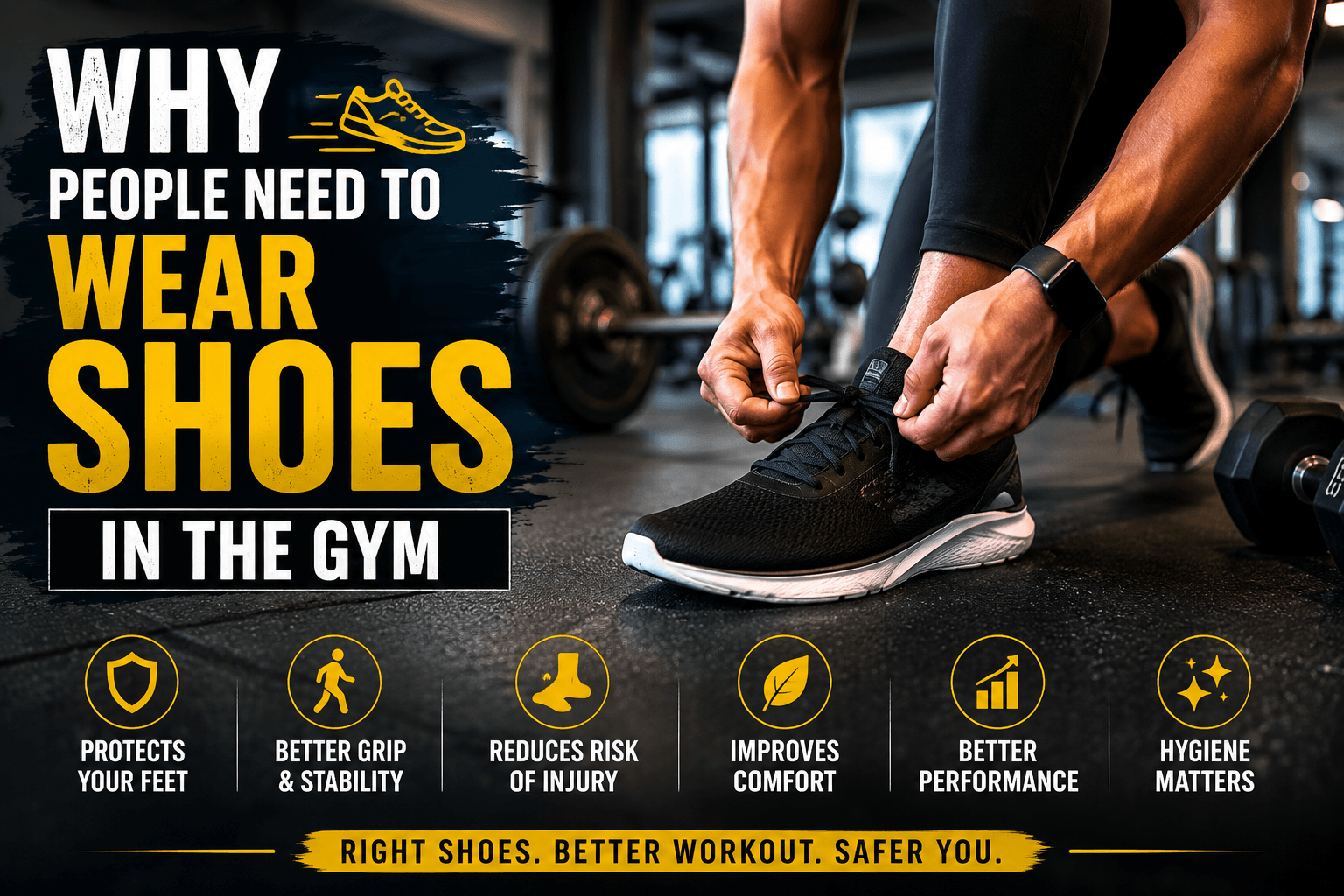
When you walk into a gym, one of the first things you will notice is that almost everyone is wearing proper workout shoes. For some people, gym shoes are simply part of their workout outfit. But wearing the right shoes is actually much more important than just looking good.
Whether you are lifting weights, running on a treadmill, doing squats, cycling, or participating in a fitness class, your feet play an important role in almost every movement. The right pair of shoes can improve stability, comfort, balance, and performance while reducing the chances of certain injuries.
So, why do people need to wear shoes in the gym? Let’s understand the major reasons.
Table of Contents
1. Shoes Protect Your Feet
The most basic reason to wear shoes in a gym is to protect your feet.
Gyms contain heavy equipment, dumbbells, weight plates, machines, benches, and other objects. If a weight accidentally falls on your foot, being barefoot provides very little protection.
Even a small dumbbell can cause significant pain or injury if it lands on your toes. Proper gym shoes provide an additional layer between your feet and the equipment around you.
Shoes can also protect your feet from sharp edges, rough surfaces, dropped equipment, and accidental contact with other gym users.
This is especially important in busy gyms where many people are moving around at the same time.
2. Better Grip and Stability
Good gym shoes provide traction between your feet and the floor.
When you perform exercises such as squats, lunges, deadlifts, or weightlifting movements, you need a stable base. If your feet slide while exercising, your body position can change suddenly, increasing the risk of losing balance.
A proper training shoe usually has a sole designed to provide better grip.
For example, during a squat, your feet should remain firmly connected to the floor. A stable shoe can help you maintain that connection and feel more secure while performing the exercise.
This does not mean shoes automatically make your technique perfect, but they can provide a more stable foundation.
3. Shoes Can Help Reduce the Risk of Injury
Exercise itself is generally beneficial for your health, but incorrect technique, excessive weight, poor recovery, and unsuitable equipment can contribute to injuries.
Footwear is one part of the overall safety equation.
Proper gym shoes can help provide cushioning, traction, and support depending on the activity. They may help your feet deal with repeated impact during activities such as running, jumping, and cardio workouts.
However, it is important to understand that wearing expensive shoes does not guarantee injury prevention. Your exercise technique, training load, mobility, strength, and recovery are also important.
Think of gym shoes as one tool that can help you exercise more comfortably and safely.
4. Extra Comfort During Workouts
A gym session can last anywhere from 30 minutes to more than an hour. During this time, your feet may experience a lot of pressure.
If you wear uncomfortable footwear, your feet may start hurting before your workout is finished. You may also feel tired or distracted.
A comfortable pair of training shoes can make your workout experience much better.
The right shoes should generally fit properly without squeezing your toes. Your heel should feel secure, and your feet should have enough room to move naturally.
Comfort is particularly important if you spend a lot of time walking, standing, or doing cardio exercises at the gym.
5. Different Exercises Need Different Types of Shoes
One common mistake beginners make is assuming that every type of gym workout requires exactly the same footwear.
Different activities place different demands on your feet.
For example, running on a treadmill involves repetitive impact and forward movement. Running shoes are designed specifically for running.
Strength training often requires a stable base. Some people prefer training shoes with a relatively firm and stable sole.
For activities involving jumping, quick movements, or changing direction, cross-training shoes may be more suitable because they are designed to handle multiple types of movement.
This is why choosing shoes based on your workout can be more useful than simply choosing a shoe because it looks attractive.
6. Better Performance During Strength Training
Your feet are the foundation of many strength exercises.
When performing exercises such as squats, deadlifts, and lunges, force travels between your feet and the floor.
A stable pair of shoes can help you feel more connected to the ground.
For heavy lifting, some athletes choose specialized weightlifting shoes because they provide a firm platform and, depending on the design, an elevated heel.
However, beginners don’t necessarily need specialized lifting shoes. A basic, comfortable, stable training shoe may be enough for general gym workouts.
The most important thing is to choose footwear that matches your training style and allows you to maintain proper technique.
7. Shoes Help With Balance
Balance becomes important during many gym exercises.
Consider movements such as:
- Lunges
- Single-leg exercises
- Step-ups
- Bulgarian split squats
- Jumping exercises
- Functional training
If your shoes have poor traction or fit badly, maintaining balance can become more difficult.
A well-fitting pair of gym shoes can give your feet a more predictable surface to work against.
Good balance also helps you control your movements instead of relying on sudden corrections.
8. Hygiene Is Another Important Reason
Gyms are shared spaces.
Many people walk around the same floors, use the same equipment, and exercise in the same areas. Wearing shoes provides a basic barrier between your feet and the gym floor.
Going barefoot in a public gym can expose your feet to sweat, dirt, and microorganisms present on shared surfaces.
There is also the possibility of stepping on something unpleasant or accidentally touching contaminated surfaces.
For general hygiene, wearing clean gym shoes and keeping your feet covered is a sensible habit.
Of course, footwear alone doesn’t replace good gym hygiene. You should also clean equipment when required, wash your hands, and maintain personal hygiene.
9. Shoes Can Improve Confidence
This may sound like a small benefit, but feeling comfortable in your workout gear can affect your mindset.
When your shoes fit well and provide good grip, you may feel more confident performing exercises.
Beginners often feel nervous when they first enter a gym. They may worry about using equipment incorrectly or performing exercises in front of other people.
Having comfortable workout clothing and suitable shoes can make the experience feel more organized and professional.
Confidence doesn’t come from expensive equipment. It comes from gradually learning, practicing, and becoming comfortable with your workouts.
But comfortable footwear can certainly contribute to a better experience.
10. Why Running Shoes Are Not Always Ideal for Weightlifting
Another important point is that not every sports shoe is suitable for every gym activity.
Many running shoes have soft, cushioned soles designed to absorb repeated impact. That can be useful for running, but a very soft sole may feel less stable during heavy strength exercises.
When lifting weights, some people prefer a firmer and flatter platform because it can provide a more stable feeling under load.
This doesn’t mean you need several expensive pairs of shoes if you are a beginner.
If your workout includes a mixture of cardio and strength training, a good cross-training shoe may be a practical option.
As your training becomes more specialized, you can consider activity-specific footwear.
11. What Should You Look for in Gym Shoes?
You don’t have to spend a huge amount of money on gym shoes.
Instead, focus on the features that matter for your workouts.
Look for:
Proper fit: Your shoes should not be too tight or excessively loose.
Good grip: The outsole should provide adequate traction for the exercises you perform.
Comfort: You should be able to wear the shoes throughout your workout without significant discomfort.
Stability: For strength training, a stable platform can be useful.
Breathability: Good airflow can help keep your feet more comfortable during longer workouts.
Activity suitability: Choose footwear according to whether you mainly run, lift weights, attend classes, or perform mixed workouts.
The best gym shoe isn’t necessarily the most expensive one. It is the one that fits your feet and supports the activities you actually do.
12. Should You Ever Exercise Barefoot?
Some people intentionally train barefoot or use minimalist footwear for certain exercises.
Barefoot training can have a place in specific situations, particularly when an experienced person is training in a controlled environment and the gym allows it.
However, that doesn’t mean everyone should exercise barefoot.
In a public gym, safety and hygiene are important considerations. There is also a greater risk of accidentally dropping equipment on an unprotected foot.
If you want to try barefoot training, understand the rules of your gym and consider whether the exercise and environment are appropriate.
Beginners should generally prioritize safety, comfort, and proper technique rather than copying advanced training methods they see online.
Final Thoughts
Wearing shoes in the gym is not simply about fashion. The right footwear can protect your feet, improve grip, provide comfort, support balance, and help you feel more stable during different exercises.
However, the perfect gym shoe depends on what you are doing.
If you spend most of your time running, look for footwear designed for running. If you primarily lift weights, stability may be more important than maximum cushioning. If you combine cardio, strength training, and functional exercises, a versatile training shoe can be a practical choice.
Most importantly, don’t believe that expensive shoes automatically mean better workouts. Your training technique, exercise selection, recovery, nutrition, and consistency have a much greater impact on your results.
Choose shoes that fit properly, match your workout, provide adequate grip, and feel comfortable.
Your feet are the foundation of many movements you perform in the gym. Taking care of them is a small step that can make your overall workout experience safer and more comfortable.
So, before your next gym session, don’t just think about your workout plan. Take a moment to think about what is on your feet too.
Kapil Kumar
Founder & Fitness Trainer – FITLIS
- 🏋️ 9+ years of fitness coaching
- 💪 Specializes in weight loss and muscle building
- 📺 YouTube: @fitlisfitness
- Instagram: @kapilkumar_79
- Facebook: @kapilkumar.7790
- GYM App: @fitlisgym
- 🌐 https://fitlis.in/about