
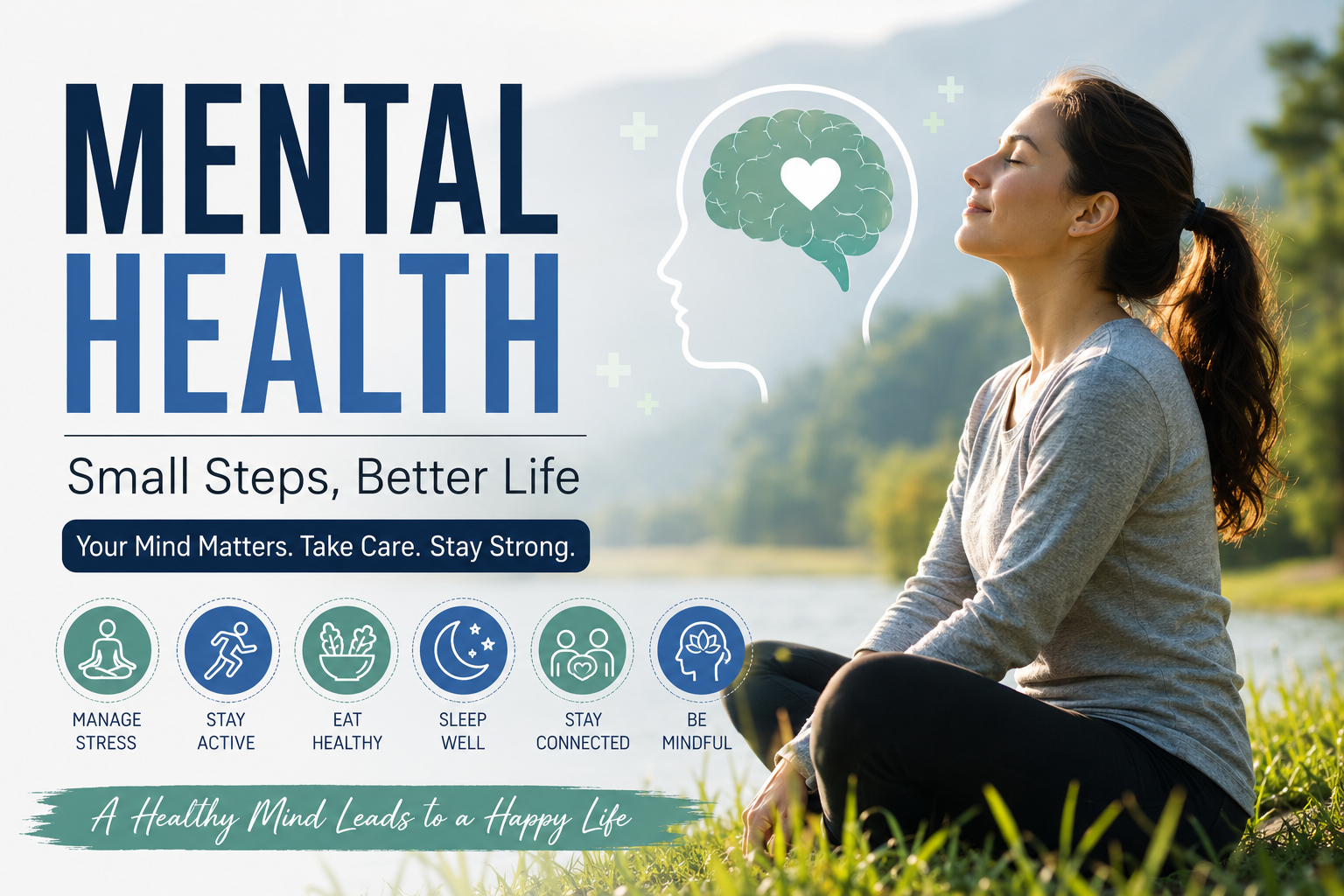
Mental health is just as important as physical health, Many people overlook it until they begin experiencing stress, anxiety, or emotional exhaustion. Your mental health affects how you think, feel, and behave in everyday life. It influences your relationships, work performance, decision-making, and even your physical health.
In today’s fast-paced world, work pressure, financial concerns, family responsibilities, and excessive screen time have made maintaining good mental health more challenging than ever. The good news is that improving your mental well-being doesn’t always require major life changes. Small, consistent habits can make a significant difference over time.
In this guide, we’ll explore what mental health is, why it matters, common warning signs of poor mental health, and practical steps you can take to build emotional resilience and lead a healthier, happier life.
Table of Contents
What Is Mental Health?
Mental health refers to your emotional, psychological, and social well-being. It determines how you cope with stress, interact with others, solve problems, and make choices.
Good mental health doesn’t mean feeling happy all the time. Everyone experiences sadness, stress, anger, or disappointment occasionally. Instead, good mental health means having the ability to manage life’s ups and downs while maintaining a healthy balance.
Why Mental Health Is Important
Maintaining good mental health offers numerous benefits, including:
- Better emotional stability
- Improved relationships
- Higher productivity at work or school
- Better sleep quality
- Stronger immune system
- Healthier lifestyle choices
- Reduced risk of chronic diseases
- Greater confidence and self-esteem
People who prioritize their mental well-being are often more resilient when facing life’s challenges.
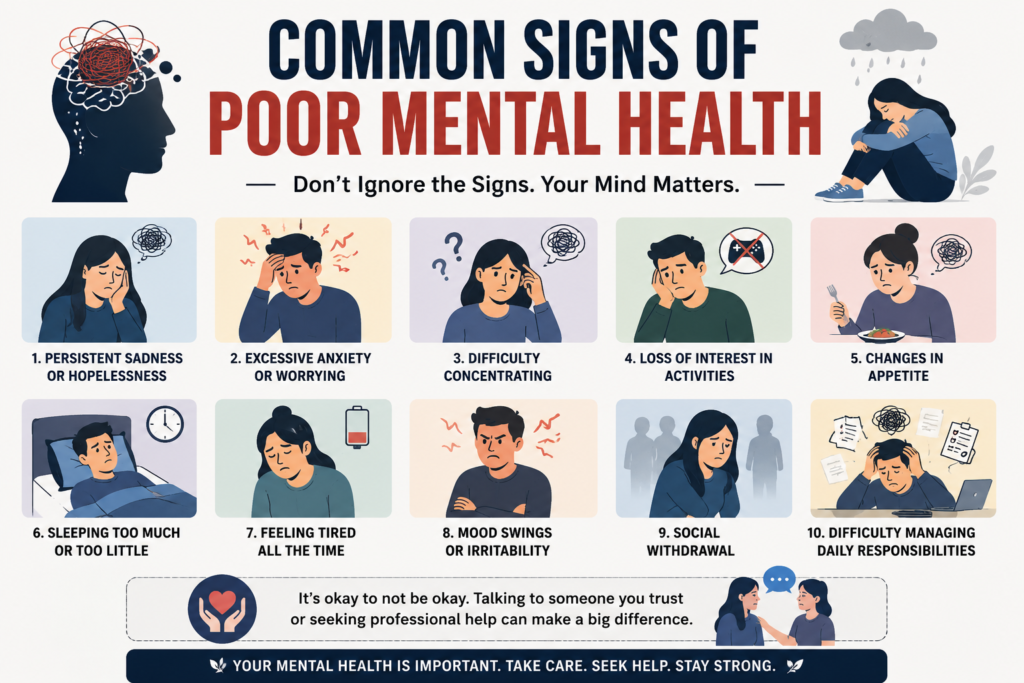
Common Signs of Poor Mental Health
Recognizing the early warning signs can help you seek support before problems become severe.
Some common symptoms include:
- Persistent sadness or hopelessness
- Excessive anxiety or constant worrying
- Difficulty concentrating
- Loss of interest in activities you once enjoyed
- Changes in appetite
- Sleeping too much or too little
- Feeling tired all the time
- Mood swings or irritability
- Social withdrawal
- Difficulty managing daily responsibilities
Experiencing one or more of these symptoms occasionally is normal. However, if they persist for several weeks or interfere with your daily life, it’s important to seek professional support.
Common Causes of Mental Health Problems
Mental health challenges can result from many factors, including:
1. Chronic Stress
Long-term stress from work, finances, or personal relationships can affect emotional well-being.
2. Lack of Sleep
Poor sleep can increase anxiety, reduce concentration, and negatively impact mood.
3. Poor Diet
Highly processed foods and nutritional deficiencies may influence brain function and emotional health.
4. Physical Inactivity
Regular exercise helps release endorphins, which naturally improve mood.
5. Social Isolation
Humans are social beings. Loneliness can increase the risk of depression and anxiety.
6. Major Life Changes
Divorce, job loss, illness, moving, or losing a loved one can significantly affect mental health.
10 Practical Ways to Improve Mental Health Naturally

1. Exercise Regularly
Physical activity is one of the most effective natural mood boosters.
Aim for at least 30 minutes of exercise most days of the week. Walking, cycling, strength training, yoga, or dancing all help improve emotional well-being.
2. Prioritize Quality Sleep
Adults generally need 7–9 hours of sleep each night.
To improve sleep:
- Keep a consistent bedtime.
- Limit caffeine in the evening.
- Avoid screens before bed.
- Keep your bedroom cool and dark.

3. Eat a Balanced Diet
Your brain needs proper nutrition to function well.
Include:
- Fruits
- Vegetables
- Whole grains
- Lean proteins
- Nuts and seeds
- Healthy fats such as olive oil and fish
Stay hydrated throughout the day.
4. Practice Mindfulness
Mindfulness involves focusing on the present moment without judgment.
Simple practices include:
- Deep breathing
- Meditation
- Yoga
- Journaling
- Gratitude exercises
Even 10 minutes daily can reduce stress.
5. Stay Connected
Strong relationships provide emotional support during difficult times.
Spend quality time with family and friends, join community groups, or participate in activities you enjoy.
6. Limit Social Media
Constant comparison and excessive screen time can negatively affect self-esteem and increase anxiety.
Try setting daily screen time limits and taking regular digital breaks.
7. Learn to Manage Stress
Healthy stress-management techniques include:
- Time management
- Regular exercise
- Deep breathing
- Relaxation techniques
- Listening to music
- Spending time outdoors
Avoid relying on alcohol or unhealthy coping mechanisms.
8. Set Realistic Goals
Break large tasks into smaller, achievable steps.
Celebrating small accomplishments builds confidence and reduces feelings of being overwhelmed.
9. Practice Gratitude
Taking a few minutes each day to write down three things you’re grateful for can improve optimism and overall life satisfaction.
10. Seek Professional Help When Needed
Talking to a psychologist, psychiatrist, or licensed counselor is a sign of strength—not weakness.
Professional support can help you develop effective coping strategies and improve your quality of life.
Mental Health and Physical Health Are Connected
Mental and physical health influence one another.
Poor mental health may increase the risk of:
- Heart disease
- High blood pressure
- Diabetes
- Obesity
- Chronic pain
Likewise, maintaining physical health through exercise, proper nutrition, and sufficient sleep often improves mental well-being.
Simple Daily Habits for Better Mental Health
Consider incorporating these habits into your routine:
- Wake up at the same time every day.
- Spend time outdoors.
- Drink enough water.
- Eat nutritious meals.
- Exercise regularly.
- Take short breaks from work.
- Practice deep breathing.
- Read a book instead of scrolling social media.
- Connect with loved ones.
- Reflect on positive moments before bed.
Small habits practiced consistently often produce lasting improvements.
When Should You Seek Professional Help?
Consider speaking with a healthcare professional if:
- Your symptoms last more than two weeks.
- Anxiety or sadness interferes with work or relationships.
- You experience panic attacks.
- You’re unable to complete everyday tasks.
- You feel overwhelmed most of the time.
- You have thoughts of harming yourself or believe life isn’t worth living.
If you ever have thoughts of self-harm or suicide, seek immediate help from local emergency services or a trusted mental health professional. You don’t have to face those feelings alone.
Frequently Asked Questions (FAQs)
Can exercise really improve mental health?
Yes. Regular physical activity releases endorphins, reduces stress, and improves mood and sleep quality.
Is stress always harmful?
No. Short-term stress can motivate you to perform well. Chronic, unmanaged stress is the type that can negatively affect mental and physical health.
How much sleep supports good mental health?
Most adults benefit from 7–9 hours of quality sleep each night.
Can diet affect mental health?
A nutritious diet supports brain function and overall well-being. While food alone doesn’t treat mental health conditions, it plays an important role in supporting good mental health.
Final Thoughts
Mental health is an essential part of living a healthy, fulfilling life. While everyone experiences emotional challenges from time to time, caring for your mental well-being through healthy habits, supportive relationships, and professional help when needed can make a meaningful difference.
Start with one small change today—whether it’s taking a walk, practicing mindfulness for five minutes, or reaching out to a friend. Over time, these simple actions can strengthen your resilience and improve your overall quality of life.
Remember, taking care of your mind is just as important as taking care of your body. Investing in your mental health is an investment in every aspect of your life.
YouTube link:- https://www.youtube.com/@fitlisfitness?sub_confirmation=1
powerlifting competition – https://youtu.be/j-yA6ecK4Hw
check IHFF 2023 bodybuilding competition –https://youtu.be/wqA73RduPNQ
Blogs:- https://fitlis.in/blog
Website:- http://fitlis.in/
GYM App:- For Android
Instagram KAPIL:- https://www.instagram.com/kapilkumar_79/
Instagram FITLIS:- https://www.instagram.com/fitlis_fitness/
Facebook:- https://www.facebook.com/kapilkumar.7790/