
Introduction
Daily protein intake is a very basic point for everyone, Protein is one of the most important nutrients your body needs every day. Whether your goal is building muscle, losing weight, improving athletic performance, or simply staying healthy, consuming the right amount of protein plays a crucial role.
However, many people still ask questions like:
- How much protein do I need daily?
- Is eating too much protein harmful?
- Can I get enough protein without supplements?
- Do women and older adults need the same amount of protein as athletes?
The truth is that there is no one-size-fits-all answer. Your ideal protein intake depends on your body weight, age, activity level, and fitness goals.
In this guide, you’ll learn how much protein you need, the best protein sources, common myths, and practical tips to meet your daily requirements.
What Is Protein?
Protein is one of the three essential macronutrients, along with carbohydrates and fats.
It is made up of amino acids, which are often called the building blocks of life because they help build, repair, and maintain body tissues.
Protein supports:
- Muscle growth and recovery
- Healthy skin and hair
- Strong bones
- Hormone production
- Enzyme function
- Immune system health
Without enough protein, your body cannot perform many essential functions efficiently.
Why Is Daily Protein Important?
Your body continuously breaks down and rebuilds proteins throughout the day.
Unlike carbohydrates and fats, your body does not store large amounts of protein for future use. That’s why eating enough protein every day is important.
Adequate protein intake helps:
- Maintain lean muscle mass
- Recover faster after exercise
- Support healthy aging
- Improve satiety
- Promote tissue repair
- Support overall health
How Much Protein Do You Need Daily?
Protein requirements vary from person to person.
General recommendations include:
Sedentary Adults
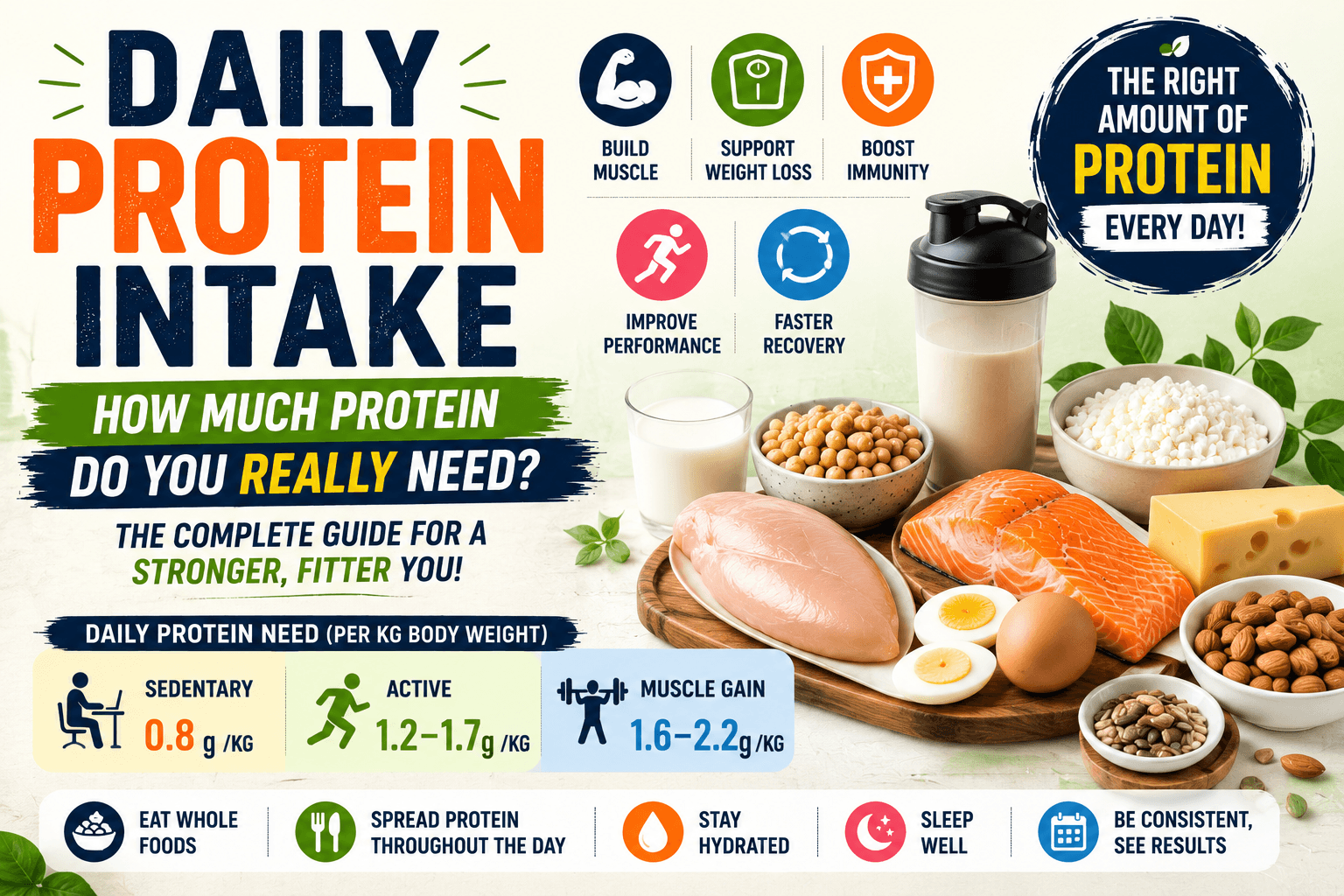
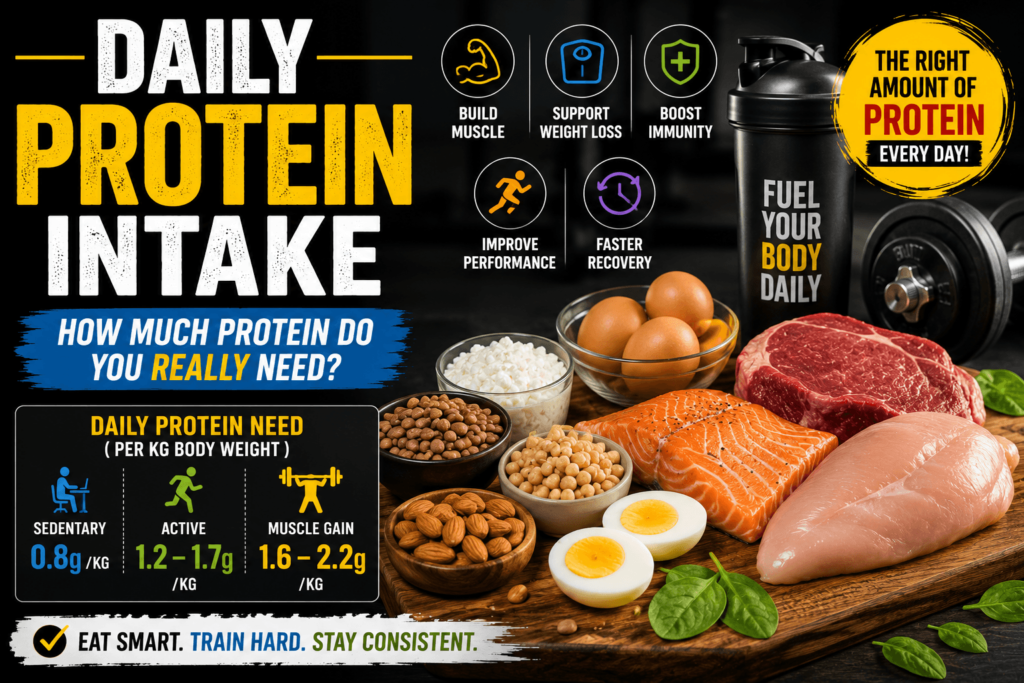
People with little physical activity typically need around 0.8 grams of protein per kilogram of body weight per day.
Active Individuals
People who exercise regularly often benefit from 1.2–1.7 grams per kilogram.
Muscle Gain
Those aiming to maximize muscle growth generally benefit from around 1.6–2.2 grams per kilogram of body weight per day.
Older Adults
Many experts recommend higher protein intake for older adults to help preserve muscle mass and strength as they age.
These are general guidelines. Individual needs may vary based on health conditions, training volume, and dietary patterns.
Daily Protein Intake Examples
| Body Weight | Sedentary | Active | Muscle Gain |
|---|---|---|---|
| 50 kg | 40 g | 60–85 g | 80–110 g |
| 60 kg | 48 g | 72–102 g | 95–130 g |
| 70 kg | 56 g | 84–119 g | 110–155 g |
| 80 kg | 64 g | 96–136 g | 130–175 g |
| 90 kg | 72 g | 108–153 g | 145–200 g |
These numbers provide a practical starting point for most healthy adults.
Best High-Protein Foods
Whole foods should always be your primary protein source.
Animal Protein Sources
- Chicken breast
- Eggs
- Fish
- Lean beef
- Greek yogurt
- Cottage cheese
- Milk
Plant-Based Protein Sources
- Lentils
- Chickpeas
- Kidney beans
- Soybeans
- Tofu
- Tempeh
- Peanuts
- Quinoa
Eating a variety of protein-rich foods also provides important vitamins and minerals.
Is Protein Powder Necessary?
Not always.
Protein powder is simply a convenient way to increase protein intake.
If you can meet your daily protein needs through food, you don’t need supplements.
Protein powder may be useful if:
- You’re busy and miss meals.
- You struggle to eat enough protein.
- You need a convenient post-workout option.
- You have increased protein requirements.
Remember, supplements should complement—not replace—a balanced diet.
Can You Eat Too Much Protein?
For most healthy people, consuming higher protein within recommended ranges is generally considered safe.
However, eating extremely high amounts offers little additional benefit for muscle growth once your daily needs are met.
Balance is important.
People with kidney disease or certain medical conditions should seek advice from a healthcare professional before significantly increasing protein intake.
When Should You Eat Protein?
While total daily intake matters most, spreading protein throughout the day may support muscle protein synthesis more effectively.
Aim to include protein in:
- Breakfast
- Lunch
- Dinner
- Snacks (if needed)
- Post-workout meals
Instead of consuming most of your protein at dinner, distribute it more evenly across your meals.
Benefits of Eating Enough Protein
Meeting your daily protein needs can provide several benefits.
Supports Muscle Growth
Protein supplies amino acids needed to repair and build muscle after exercise.
Helps with Weight Loss
Protein increases fullness, which may reduce overall calorie intake.
Improves Recovery
Athletes and active individuals recover better after training with adequate protein.
Supports Healthy Aging
Higher protein intake may help older adults maintain muscle mass and strength.
Strengthens the Immune System
Many immune cells rely on amino acids to function properly.
Common Signs You May Not Be Getting Enough Protein
Although symptoms vary, inadequate protein intake may contribute to:
- Slow recovery after exercise
- Loss of muscle mass
- Increased hunger
- Fatigue
- Brittle hair or nails
- Poor wound healing
If you suspect a nutritional deficiency, consult a healthcare professional.
Sample High-Protein Meal Plan
Breakfast
- Oats with milk
- 3 eggs
Mid-Morning
- Greek yogurt
- Mixed nuts
Lunch
- Grilled chicken
- Rice
- Vegetables
Evening Snack
- Cottage cheese
- Fruit
Dinner
- Fish or tofu
- Vegetables
- Whole grains
Before Bed
- Glass of milk
This is only an example and should be adjusted to meet your calorie and protein requirements.
Common Protein Myths
Myth 1: More Protein Always Builds More Muscle
Fact: Muscle growth depends on training, recovery, calorie intake, and genetics—not protein alone.
Myth 2: Protein Powder Is Better Than Food
Fact: Whole foods provide protein along with vitamins, minerals, and fiber.
Myth 3: High-Protein Diets Are Only for Bodybuilders
Fact: Everyone needs protein, although the required amount varies.
Myth 4: Plant Protein Is Inferior
Fact: A well-planned plant-based diet can provide sufficient protein for most people.
Frequently Asked Questions
Can I get enough protein without supplements?
Yes. Most people can meet their protein needs through a balanced diet.
How much protein should I eat after a workout?
A meal containing 20–40 grams of high-quality protein is generally sufficient for most adults.
Is protein important for weight loss?
Yes. Protein helps preserve muscle mass and improves satiety, making it easier to maintain a calorie deficit.
Should I eat protein on rest days?
Yes. Your body continues repairing and maintaining tissues even on non-training days.
Conclusion
Protein is an essential nutrient that supports muscle growth, recovery, metabolism, immune function, and overall health. The right amount of protein depends on your age, body weight, activity level, and fitness goals.
For most people, meeting daily protein needs through whole foods should be the priority. Protein supplements can be helpful when needed, but they are not a requirement for good health.
Instead of chasing trends, focus on eating a balanced diet, exercising regularly, getting enough sleep, and staying consistent with healthy habits.
Remember, it’s not about eating the most protein—it’s about eating the right amount for your body and lifestyle.
YouTube link:- https://www.youtube.com/@fitlisfitness?sub_confirmation=1
Website:- http://fitlis.in/
GYM App:- For Android
Instagram KAPIL:- https://www.instagram.com/kapilkumar_79/
Instagram FITLIS:- https://www.instagram.com/fitlis_fitness/
Facebook:- https://www.facebook.com/kapilkumar.7790/