
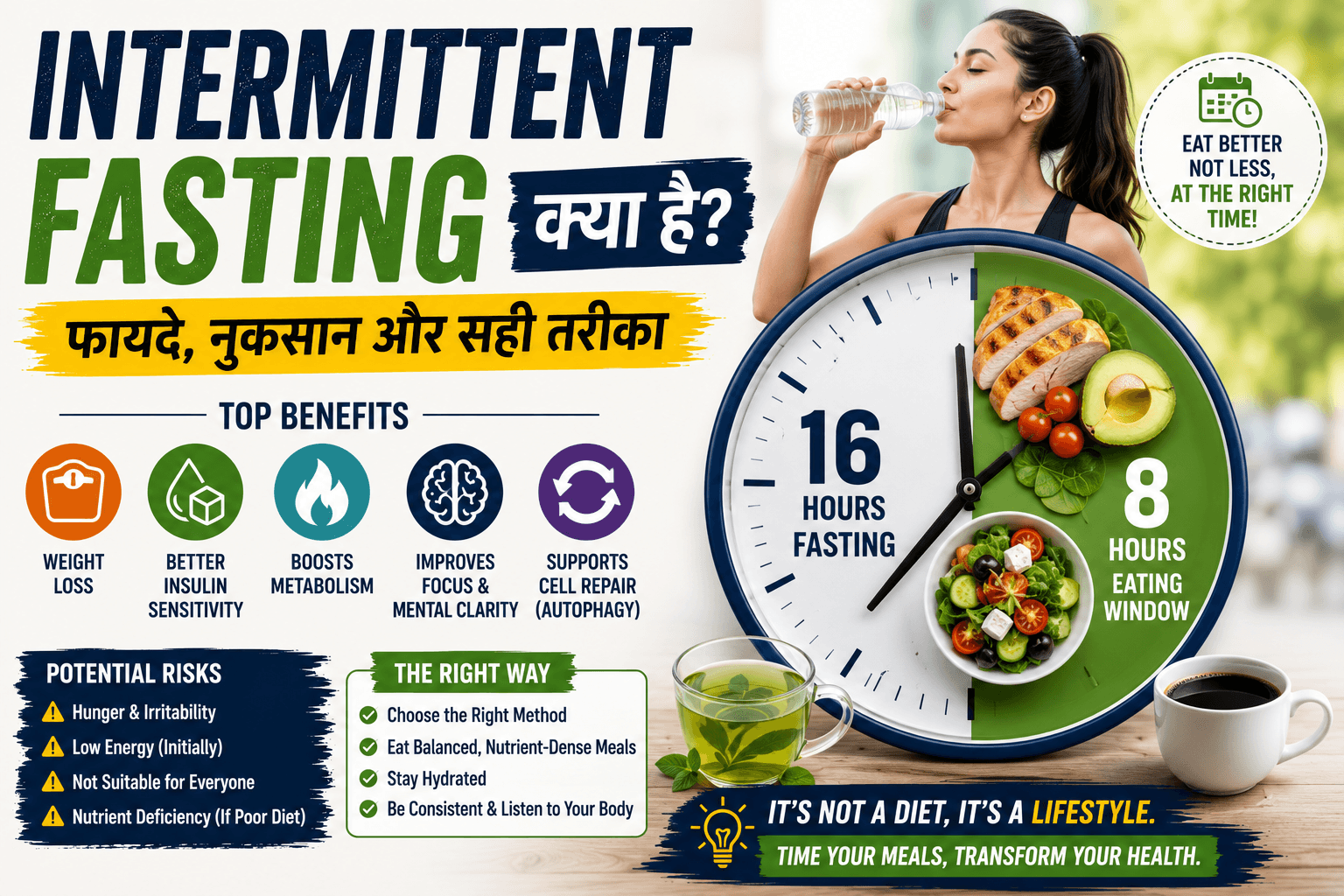
Intermittent Fasting (IF) has become one of the most popular eating patterns in recent years. From fitness enthusiasts and athletes to busy professionals, many people use intermittent fasting to support weight management and improve their overall health.
But despite its popularity, there are still many misconceptions about intermittent fasting. Some people believe it’s a crash diet, while others think you have to starve yourself for long hours.
The truth is much simpler.

IF is not a diet—it is an eating schedule. It focuses on when you eat rather than what you eat.
In this complete beginner’s guide, you’ll learn what intermittent fasting is, how it works, its benefits, potential risks, different fasting methods, and whether it’s the right choice for you.
What Is Intermittent Fasting?
Intermittent fasting is an eating pattern that alternates between periods of eating and periods of fasting.
During the fasting period, you avoid foods and calorie-containing drinks. During the eating window, you consume your daily meals.
Unlike traditional diets that tell you which foods to eat, intermittent fasting mainly focuses on meal timing.
For example, instead of eating throughout the day, you may eat all your meals within an 8-hour window and fast for the remaining 16 hours.
How Does IF Work?
Whenever you eat, your body uses carbohydrates as its primary source of energy.
After several hours without food, insulin levels gradually decrease, and your body begins relying more on stored energy, including fat.
This natural shift may help some people manage body weight when intermittent fasting is combined with a healthy calorie-controlled diet.
However, fasting alone does not guarantee weight loss. You still need to avoid consistently eating more calories than your body requires.
Popular Types of Intermittent Fasting
1. 16:8 Method
This is the most popular and beginner-friendly approach.
- Fast for 16 hours.
- Eat during an 8-hour window.
Example:
- Eating window: 12:00 PM to 8:00 PM
- Fasting window: 8:00 PM to 12:00 PM the next day
2. 14:10 Method
Perfect for beginners.
- Fast for 14 hours.
- Eat within 10 hours.
Many people find this easier to maintain than the 16:8 schedule.
3. 5:2 Method
With this approach:
- Eat normally for five days each week.
- On two non-consecutive days, significantly reduce calorie intake.
4. Alternate-Day Fasting
People alternate between regular eating days and fasting or very low-calorie days.
This method can be more challenging and may not be suitable for beginners.
Benefits of Intermittent Fasting
1. May Support Weight Loss
Intermittent fasting may help reduce calorie intake by limiting the time available for eating.
Many people naturally consume fewer calories when they have fewer eating opportunities.
However, weight loss depends on maintaining a calorie deficit over time.
2. May Improve Insulin Sensitivity
Some research suggests intermittent fasting may improve insulin sensitivity in certain individuals, which can support healthy blood sugar regulation.
However, results vary between individuals, and people with diabetes should consult their healthcare provider before trying intermittent fasting.
3. May Simplify Meal Planning
Instead of eating multiple times throughout the day, many people appreciate having a structured eating schedule.
This can reduce unnecessary snacking and make meal planning easier.
4. May Improve Metabolic Health
Some studies suggest intermittent fasting may have positive effects on certain markers of metabolic health when combined with a balanced diet and healthy lifestyle.
Research is still ongoing, and results differ among individuals.
5. May Improve Focus
Some people report improved concentration during fasting periods.
However, experiences vary, and not everyone notices this effect.
Can Intermittent Fasting Help You Lose Belly Fat?
One of the biggest myths is that intermittent fasting specifically burns belly fat.
The truth is:
No eating schedule can target fat loss from a specific body part.
Fat loss occurs throughout the entire body.
If intermittent fasting helps you maintain a calorie deficit consistently, it can contribute to overall fat loss, including a reduction in waist size over time.
What Can You Drink During Fasting?
During the fasting window, calorie-free beverages are generally acceptable.
Examples include:
- Water
- Black coffee (without sugar or cream)
- Plain tea
- Green tea
- Sparkling water (without added sugar)
Avoid sugary drinks, fruit juice, soft drinks, and milk-based beverages during the fasting period if your goal is to maintain the fast.
What Should You Eat During the Eating Window?
Intermittent fasting is not an excuse to eat unhealthy foods.
Focus on balanced meals that include:
Protein
- Chicken
- Fish
- Eggs
- Greek yogurt
- Lentils
- Tofu
Healthy Carbohydrates
- Brown rice
- Oats
- Whole-grain bread
- Sweet potatoes
Healthy Fats
- Nuts
- Seeds
- Olive oil
- Avocados
Fruits and Vegetables
Aim for a colorful variety to provide fiber, vitamins, and minerals.
Is Intermittent Fasting Safe?
For many healthy adults, intermittent fasting can be a safe eating pattern when practiced appropriately.
However, it is not suitable for everyone.
You should consult a qualified healthcare professional before trying intermittent fasting if you:
- Have diabetes
- Are pregnant or breastfeeding
- Have a history of eating disorders
- Have certain medical conditions
- Take medications that require food at specific times
Children and adolescents should generally not start intermittent fasting unless advised by a healthcare professional.
Possible Side Effects
During the first few days, some people may experience:
- Hunger
- Headaches
- Irritability
- Fatigue
- Difficulty concentrating
These symptoms often improve as the body adjusts, but if symptoms are severe or persistent, discontinue fasting and seek medical advice.
Common Mistakes Beginners Make
1. Eating Too Much During the Eating Window
Some people consume excessive calories because they believe fasting alone guarantees weight loss.
It doesn’t.
2. Not Drinking Enough Water
Hydration remains important during fasting.
Drink water regularly throughout the day.
3. Skipping Protein
Protein supports muscle maintenance and helps you stay full.
Include a protein source in every main meal.
4. Breaking the Fast with Junk Food
Highly processed foods can make it more difficult to maintain a balanced diet.
Choose nutritious meals instead.
5. Starting With Long Fasts
Beginners often do better with a 12-hour or 14-hour fast before gradually increasing the fasting duration if appropriate.
Sample 16:8 Meal Plan
12:00 PM – Lunch
- Grilled chicken
- Brown rice
- Mixed vegetables
- Salad
3:30 PM – Snack
- Greek yogurt
- Mixed berries
- Almonds
7:00 PM – Dinner
- Fish or tofu
- Sweet potato
- Steamed vegetables
Throughout the Day
- Plenty of water
- Black coffee or unsweetened tea during fasting hours if desired
Common Myths About Intermittent Fasting
Myth 1: Fasting Means Starving Yourself
Fact: Intermittent fasting includes planned eating periods and is not the same as starvation.
Myth 2: You Can Eat Anything
Fact: Food quality and total calorie intake still matter.
Myth 3: Breakfast Is Mandatory for Everyone
Fact: Meal timing preferences vary. Some people prefer eating breakfast, while others do well with a later first meal.
Myth 4: Intermittent Fasting Works for Everyone
Fact: Different eating patterns work for different people. The best plan is one you can follow safely and consistently.
Frequently Asked Questions
Is intermittent fasting good for beginners?
Yes, many beginners start with a 12:12 or 14:10 schedule before progressing to longer fasting periods if appropriate.
Can I exercise while fasting?
Many people exercise during fasting periods. However, your response may depend on workout intensity, experience, and individual tolerance.
Will intermittent fasting cause muscle loss?
Adequate protein intake and regular strength training can help preserve muscle during weight loss.
How long does it take to see results?
Results vary depending on calorie intake, physical activity, sleep, stress, and consistency. Sustainable progress usually takes several weeks rather than days.
Conclusion
Intermittent fasting is a flexible eating pattern that focuses on when you eat rather than what you eat. For many healthy adults, it can be an effective way to support weight management and simplify meal planning when combined with balanced nutrition and regular exercise.
However, intermittent fasting is not a magic solution. Long-term success still depends on maintaining a healthy calorie intake, eating nutritious foods, staying physically active, getting enough sleep, and managing stress.
If intermittent fasting fits your lifestyle and is appropriate for your health, it can be a practical tool to help you build healthier habits. If you have any medical condition or concerns, speak with a qualified healthcare professional before making major changes to your eating pattern.
Remember, the best nutrition plan is the one that is safe, balanced, and sustainable for your individual needs.
Kapil Kumar
Founder & Fitness Trainer – FITLIS
- 🏋️ 9+ years of fitness coaching
- 💪 Specializes in weight loss and muscle building
- 📺 YouTube: @fitlisfitness
- Instagram: @kapilkumar_79
- Facebook: @kapilkumar.7790
- GYM App: @fitlisgym
- 🌐 https://fitlis.in/about