
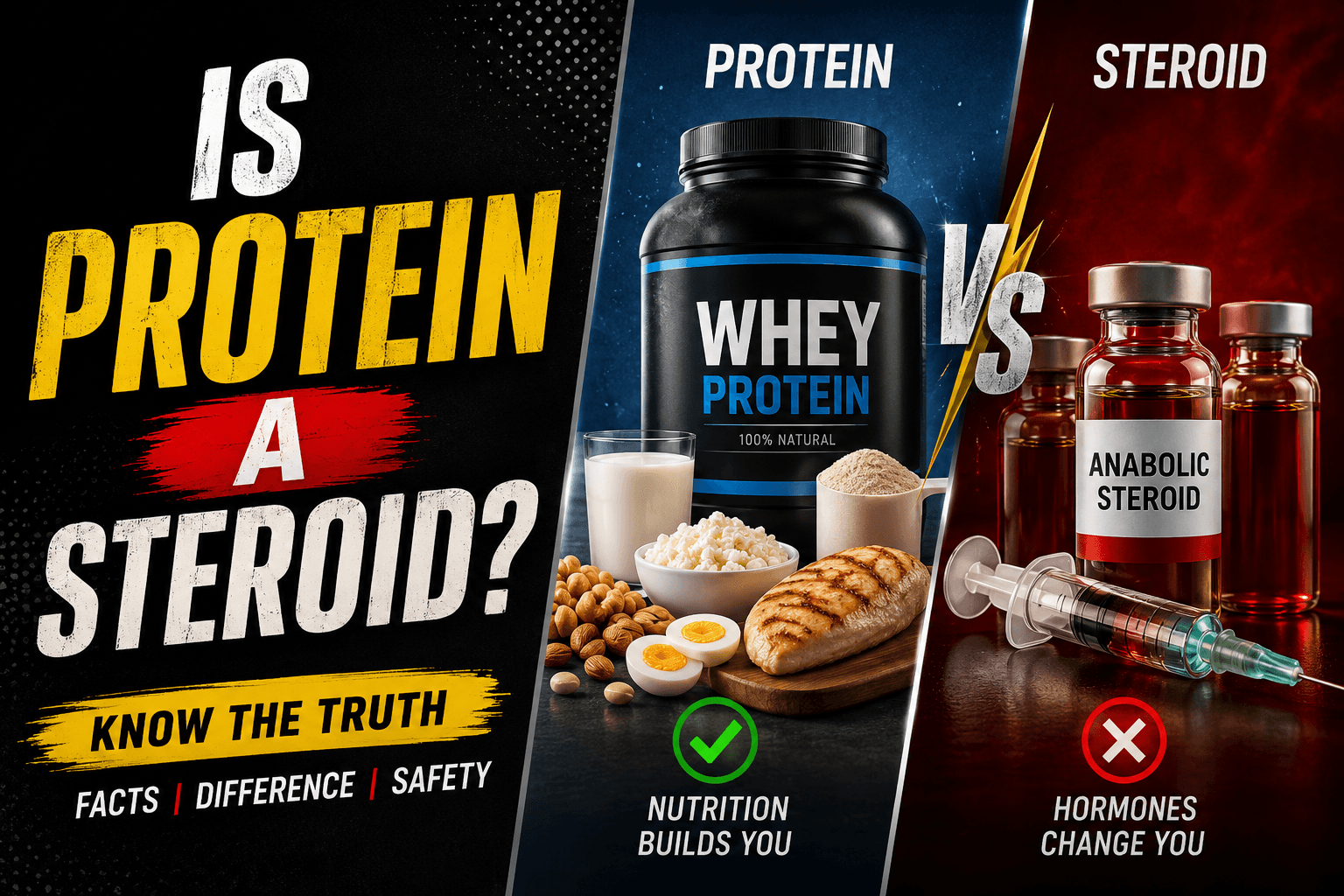
If you have recently started going to the gym, you may have heard people say things like, “Protein powder is basically a steroid,” or “If you take protein, your muscles will grow unnaturally.” These statements can create a lot of confusion, especially for beginners.
So, is protein a steroid?
The simple answer is no. Protein is not a steroid.
Protein is an essential nutrient that your body needs every day to build and repair muscles, bones, skin, hormones, enzymes, and other tissues. Steroids, on the other hand, are a completely different group of substances. Some steroids are naturally produced by your body, while anabolic steroids are synthetic substances that can significantly affect muscle growth and hormone levels.
Understanding the difference can help you make better decisions about your diet, workouts, and supplements.
What Is Protein?
Protein is one of the three major macronutrients, along with carbohydrates and fats.
Your body breaks dietary protein down into smaller compounds called amino acids. These amino acids are then used for many important functions, including repairing muscle tissue after exercise.
Foods naturally rich in protein include:
- Eggs
- Milk and curd
- Paneer
- Chicken
- Fish
- Soybeans
- Dal
- Chickpeas
- Peanuts
- Beans
- Meat
Protein is not something that only bodybuilders need. Everyone needs protein for normal body function.
For someone who exercises regularly, however, protein becomes particularly important because resistance training creates small amounts of muscle damage that need to be repaired and adapted to.
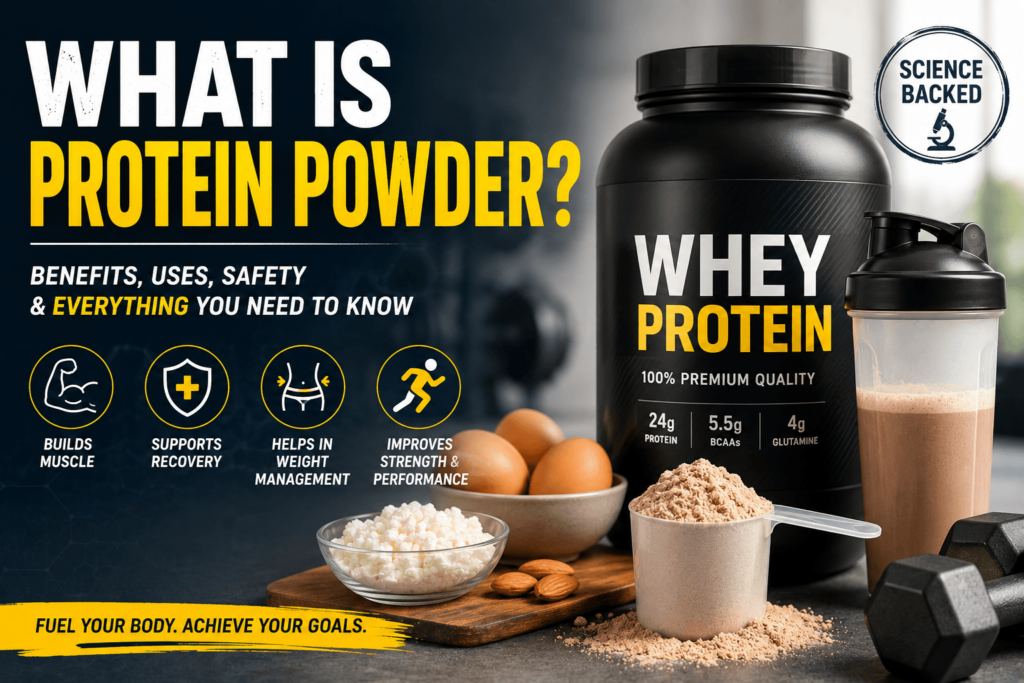
What Is Protein Powder?
Protein powder is simply a concentrated source of protein.
Common types include whey protein, casein protein, soy protein, pea protein, and other plant-based proteins.
For example, whey protein is made from milk. During the production of certain dairy products, whey can be separated and processed into a powder containing a high concentration of protein.
So when you drink a protein shake, you are not automatically taking steroids.
In simple terms, protein powder is similar to getting protein from food, but it is often more convenient.
If you can comfortably get enough protein from eggs, milk, chicken, paneer, dal, fish, or other foods, you may not need protein powder at all.
What Are Steroids?
The word “steroid” can refer to several different compounds.
Our body naturally produces certain steroid hormones, including hormones involved in metabolism, reproduction, and other biological processes.
However, when people in the gym talk about “steroids,” they often mean anabolic-androgenic steroids.
These are synthetic substances related to testosterone. They can increase muscle mass and strength, but they can also carry significant health risks, particularly when used without medical supervision.
This is very different from consuming protein.
Protein vs Steroids: What’s the Difference?
The biggest difference is what they actually are and how they work.
Protein is a nutrient.
Your body uses amino acids from protein to build and repair tissues.
Anabolic steroids are hormone-related drugs.
They can influence the body’s hormonal system and increase anabolic activity.
Think of protein as a building material. Your body uses amino acids to build and maintain tissues.
Steroids work more like powerful biological signals that can alter how your body functions.
They are not interchangeable.
Does Protein Powder Make You Muscular?
Protein can support muscle growth, but drinking protein powder alone will not suddenly make you muscular.
Muscle growth generally requires several things working together:
Resistance training + adequate protein + sufficient calories + recovery + consistency
If you lift weights but don’t consume enough protein or overall nutrition, your progress may be slower.
At the same time, consuming huge amounts of protein without appropriate training won’t magically create large muscles.
Your body needs a reason to adapt, and resistance training provides that stimulus.
Can Protein Increase Testosterone?
Protein itself is not a testosterone injection or anabolic steroid.
Eating adequate protein supports normal nutrition and recovery, but that does not mean protein powder works like testosterone or anabolic steroids.
Some people confuse improved gym performance and muscle growth with an increase caused by steroids.
In reality, beginners can experience noticeable improvements simply because their body is adapting to resistance training, especially when they improve their diet and sleep at the same time.

Why Do Some People Think Protein Is a Steroid?
There are several reasons for this misconception.
First, protein supplements are heavily marketed in the fitness industry. Beginners may see muscular athletes promoting protein products and assume the product itself is responsible for their physique.
Second, some people believe that anything sold in a powder or supplement container must be a drug.
Third, social media has created a lot of misinformation around fitness and bodybuilding.
A person may see someone drinking a protein shake and then developing a muscular physique and assume the shake caused the entire transformation.
But building muscle is a much bigger process involving training, nutrition, genetics, recovery, lifestyle, and time.
Is Whey Protein Safe?
For most healthy people, whey protein can be a convenient way to increase daily protein intake when used appropriately.
However, “more” doesn’t automatically mean “better.”
If your regular diet already provides enough protein, adding several protein shakes every day may simply add unnecessary calories and expense.
People with certain medical conditions or dietary restrictions should speak with an appropriate healthcare professional before significantly changing their protein intake or using supplements.
Also, not every supplement product is equal. Look for reputable products with clear ingredient labels and avoid products making unrealistic promises such as “instant muscle,” “steroid-like results,” or “huge gains without training.”
How Much Protein Do You Need?
Protein requirements vary depending on factors such as body weight, age, activity level, training goals, and overall diet.
Someone who does regular resistance training may need more protein than someone who is mostly sedentary.
Instead of blindly following the number written on a supplement advertisement, consider your complete daily diet.
A fitness professional or qualified nutrition professional can help you estimate an appropriate intake based on your individual goals.
Remember, protein is only one part of the picture.
Carbohydrates provide energy for training, dietary fats support important bodily functions, and micronutrients are also essential for overall health.
Can You Build Muscle Without Protein Powder?
Absolutely.
Protein powder is not compulsory for muscle growth.
You can obtain protein from normal foods such as eggs, chicken, fish, milk, curd, paneer, soy, lentils, beans, and chickpeas.
For example, an Indian diet can provide plenty of protein through combinations of dal, rice, roti, curd, milk, paneer, eggs, soy, and other protein-rich foods.
Protein powder is mainly a matter of convenience.
If you’re busy and find it difficult to prepare or eat enough protein-rich food, a shake can make reaching your daily intake easier.
Does Taking Protein Mean You Are Taking Steroids?
No.
This is one of the most important points to remember.
Protein ≠ Steroids
Protein is a nutrient found naturally in foods.
Protein powder is a concentrated form of protein.
Anabolic steroids are hormone-related drugs that can have powerful effects on the body and potential health risks.
They should never be treated as the same thing.
Final Thoughts
If someone tells you that drinking whey protein means you’re taking steroids, you can confidently tell them that the two are completely different.
Protein is an essential nutrient required by the human body. It helps maintain and repair tissues and plays an important role in muscle recovery and growth.
Protein powder is simply a convenient way to consume protein when your normal diet doesn’t provide enough.
Steroids are a completely different category of substances, particularly anabolic steroids, which can affect the body’s hormonal system and carry potential risks.
If your goal is to build muscle naturally, focus on the basics first: progressive strength training, adequate protein, a balanced diet, good sleep, hydration, and consistency.
You don’t need to be afraid of protein simply because you see it in a supplement container.
The real question isn’t “Is protein a steroid?”
The better question is: “Am I getting enough protein and following a balanced training and nutrition plan for my goals?”
For most beginners, getting the basics right will make a much bigger difference than chasing complicated supplements or shortcuts.
Kapil Kumar
Founder & Fitness Trainer – FITLIS
- 🏋️ 9+ years of fitness coaching
- 💪 Specializes in weight loss and muscle building
- 📺 YouTube: @fitlisfitness
- Instagram: @kapilkumar_79
- Facebook: @kapilkumar.7790
- GYM App: @fitlisgym
- 🌐 https://fitlis.in/about